

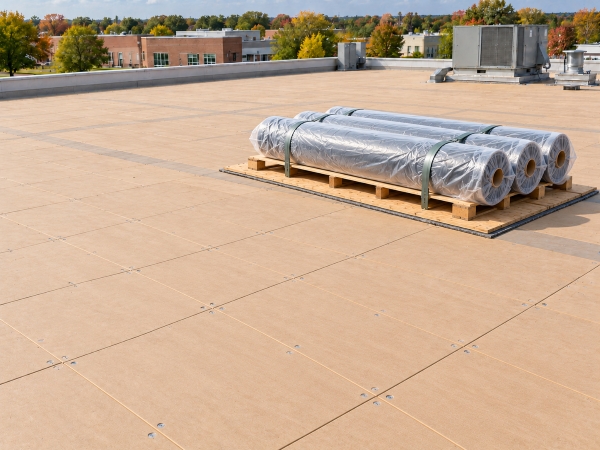
Flat roof replacement in Glasgow, KY involves removing or covering an existing commercial roof and installing a new system when the documented condition supports a broader scope than repair or restoration. It is a larger decision than a repair or a coating, and the right scope depends on what is actually wrong with the existing roof, what sits beneath the surface, and how the building is used.
Commercial Roofing Pros installs replacement roofing systems for commercial buildings in Glasgow, KY, including TPO, PVC and EPDM single-ply membranes and spray foam. This guide explains how to tell when replacement is the right call, what a replacement project includes, how the main options differ, and what to compare in written proposals.
Signs a Flat Roof May Need Replacement
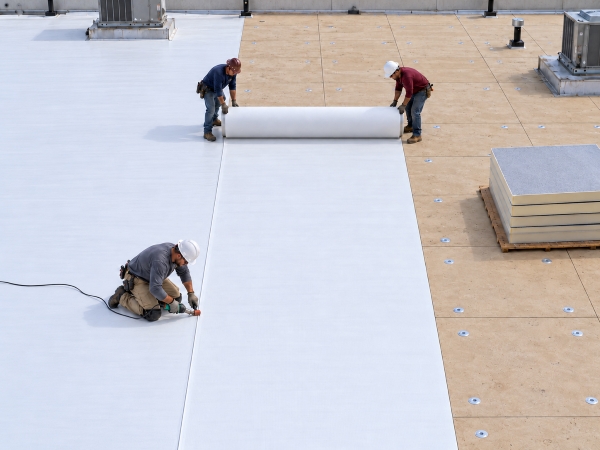
No single symptom proves a roof needs to be replaced. Replacement is usually considered when several conditions point the same way.
- Repeated leaks in different places. Leaks that recur in different areas can indicate broader membrane, flashing, moisture, or substrate conditions that deserve a full-roof evaluation.
- Wet insulation over a wide area. Widespread wet insulation can change the project from localized repair or restoration to partial or full replacement, depending on the assembly and extent.
- Widespread membrane failure. Widespread cracking, shrinkage, open seams, blistering, or other deterioration can indicate that isolated repairs will not address the full condition.
- Deck damage. Rot, corrosion, deflection, or other deck and substrate concerns require evaluation before the replacement scope is set.
- Drainage problems that cannot be corrected on the existing assembly. Recurring ponding may require changes to insulation slope, drainage components, structure, or another part of the roof design.
- Repeated repair history and broader deterioration. When service needs continue across multiple areas, the owner may need to compare the cumulative repair scope with a planned replacement.
Before deciding, compare replacement with the alternatives. A localized problem may only need commercial roof repairs in Glasgow, and a sound roof with a worn surface may be a restoration candidate, as described on our flat roof restoration page for Glasgow.
Start With an Inspection
A replacement proposal is only as good as the information behind it. A commercial roof inspection in Glasgow can document accessible roof conditions, drainage, flashing, penetrations, previous repairs, and visible signs that may justify additional moisture evaluation. Where thermal imaging or another screening method is used, it should be treated as one source of evidence and interpreted with the roof assembly, weather conditions, and any confirmatory investigation needed for the project. The inspection also helps decide whether the project is a full tear-off or a recover.
Tear-Off or Recover
Two common replacement approaches are tear-off and recover, and the choice affects scope, debris, access, moisture handling, attachment, and building disruption.
Full tear-offExisting roof layers included in the tear-off scope are removed so the deck, insulation, attachment, and concealed conditions can be evaluated before the new system is installedWidespread moisture, deck or substrate concerns, unsuitable existing layers, or an assembly that is not a sound recover candidateMore removal and debris handling, with schedule and disruption depending on roof size, access, weather, and concealed conditionsRecover over the existing roofA new compatible membrane or foam system is installed over an existing assembly that has been evaluated and found suitable to remainExisting roof, attachment, moisture condition, substrate, layer count, and code requirements support the recover approachUnsuitable when concealed moisture, attachment, substrate, drainage, or layer-count requirements are not resolved
| Approach | What it involves | When it fits | Limits |
|---|---|---|---|
| Full tear-off | Existing roof layers included in the tear-off scope are removed so the deck, insulation, attachment, and concealed conditions can be evaluated before the new system is installed | Widespread moisture, deck or substrate concerns, unsuitable existing layers, or an assembly that is not a sound recover candidate | More removal and debris handling, with schedule and disruption depending on roof size, access, weather, and concealed conditions |
| Recover over the existing roof | A new compatible membrane or foam system is installed over an existing assembly that has been evaluated and found suitable to remain | Existing roof, attachment, moisture condition, substrate, layer count, and code requirements support the recover approach | Unsuitable when concealed moisture, attachment, substrate, drainage, or layer-count requirements are not resolved |
A recover should be considered only when the existing assembly, moisture condition, attachment, substrate, drainage, layer count, and applicable requirements support it. The written scope should explain how those conditions were evaluated.
Replacement System Options
Several systems are used for flat and low-slope commercial roofs. Each system has different detailing, attachment, seam, maintenance, and project-scope considerations.
- TPO: a thermoplastic single-ply membrane commonly installed with heat-welded seams, covered on our TPO roofing page for Glasgow.
- PVC: a thermoplastic single-ply membrane with heat-welded seams; suitability for grease, oils, chemicals, or other exposures depends on the specific product and building conditions, described on our PVC roofing page for Glasgow.
- EPDM: a synthetic-rubber single-ply membrane that uses compatible seam and flashing methods, covered on our rubber roof membrane page for Glasgow.
- Spray foam: a spray-applied polyurethane foam system protected by a compatible coating, described on our spray foam roofing page for Glasgow.
Choosing between them should be based on the existing roof, substrate, drainage, building use, access, exposures, attachment needs, and written system requirements rather than headline benefits. The single-ply roofing system guide for Glasgow walks through the conditions that affect membrane selection.
What a Replacement Project Includes
A well-scoped replacement should define more than the field membrane. Proposals should spell out each of the following.
- Tear-off or recover scope, and how wet or damaged materials will be handled.
- Deck repairs and any needed replacement of insulation.
- Drainage, including tapered insulation, drains, scuppers and low areas.
- Attachment method, matched to the deck, substrate, roof design, and applicable project requirements.
- Flashing and details at walls, curbs, edges and penetrations.
- Protection measures for the building, occupants, access areas, equipment, and adjacent property during the work.
- Cleanup, final inspection and closeout documentation.
Comparing Proposals
Two proposals for the same roof can differ by more than the price. Compare written scopes line by line. Check the membrane type and thickness, the insulation, the attachment method, the flashing details, the drainage plan, the schedule and what is done if hidden damage is found after tear-off. A lower total may reflect a different scope, material specification, allowance, exclusion, or amount of preparation and detailing. Be cautious about any proposal that cannot explain how moisture was assessed. Any warranty terms should be reviewed in the actual written documents, including coverage, exclusions, maintenance obligations, and who is responsible for each part.
Planning Around Your Business
A replacement affects an occupied building. Ask how access, noise, rooftop equipment, deliveries and parking will be handled, how the roof will be protected from weather during tear-off, and what happens if rain interrupts the work. A phased plan may help manage access and operations on some larger buildings, depending on the roof layout and work sequence.
After Replacement
A new roof still needs inspection and maintenance appropriate to the system, building use, exposure, and any written maintenance requirements. Keep drainage paths clear and address damage from rooftop service work when it is found. The roof maintenance program for Glasgow covers routine inspections and seasonal preparation.
Flat Roof Replacement in Glasgow, KY
Commercial Roofing Pros serves commercial property owners in Glasgow, KY. When replacement is being compared with repair or restoration, the useful starting information includes the roof type, known leak history, prior repairs, building use, drainage concerns, and any existing inspection findings.
Frequently Asked Questions
How do I know if my flat roof should be replaced or repaired?
Repair can fit a defined problem on an otherwise serviceable roof. Replacement becomes more appropriate to compare when deterioration, moisture, attachment, substrate, drainage, or recurring leaks extend across broader areas.
Can a new roof go over the old one?
Sometimes. A recover is considered only when the existing assembly, moisture condition, attachment, substrate, layer count, drainage, and applicable requirements support it. Otherwise a tear-off or another scope may be needed.
How long does a flat roof replacement take?
It depends on roof size, tear-off or recover scope, concealed repairs, system type, access, sequencing, and weather. The written proposal should explain the expected sequence and weather contingencies.
Which replacement system is best for a flat commercial roof?
There is no single best option. TPO, PVC, EPDM, and spray foam fit different roof conditions and project requirements, so the choice should follow the building, existing assembly, drainage, use, access, and written scope.