

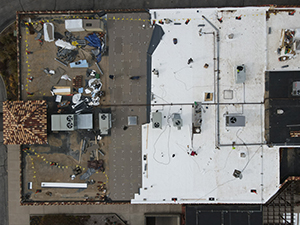
Commercial roof repairs in Glasgow, KY should start by identifying whether the problem is a localized defect or evidence of a broader roof condition. Commercial Roofing Pros provides commercial roof repair and inspection services in Kentucky. A ceiling stain, open seam, or damaged flashing can point to a problem, but the repair scope should come from what the roof inspection confirms.
A localized repair may fit when the defect can be defined, the surrounding roofing remains serviceable, and the affected area can be repaired with materials compatible with the existing system. Repeated failures, broader moisture, deteriorated roofing, or drainage conditions may justify additional assessment before another patch is approved. For a repair assessment, call 857-663-7767.
What Makes a Roof Defect Repairable?
Commercial roofs can develop isolated problems at seams, penetrations, flashings, drains, membrane areas, or metal-roof details. The repair method depends on the roof system and the condition around the defect. A single-ply seam repair, curb-flashing repair, membrane patch, or metal-panel repair uses different materials and preparation, so the existing roof assembly should be identified before the scope is written.
The key question is not whether one defect is visible. It is whether the defect is limited enough that repairing it addresses the actual problem. If nearby material is brittle, repeatedly failing, wet, poorly attached, or affected by a drainage issue, the contractor may need to investigate beyond the most obvious opening.
Evidence That Separates a Localized Repair from a Broader Assessment
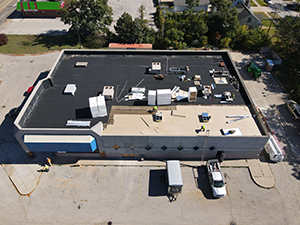
Water can travel through insulation, along decking, or around rooftop details before it appears inside the building. The visible symptom may be useful evidence, but it does not establish the roof entry point or the full moisture extent.
| Area | What the Inspection Checks | Localized Repair Evidence | Broader Assessment Trigger |
|---|---|---|---|
| Seams | Open, lifted, or separated seams and the condition of nearby roofing | A limited failed seam with surrounding material suitable for compatible repair | Repeated seam failure or widespread cracking, brittleness, or deterioration |
| Penetrations | Pipes, vents, curbs, equipment supports, boots, collars, and surrounding details | One identified penetration defect with serviceable surrounding roofing | Repeated failures, movement, or deterioration across several penetration details |
| Flashing | Wall, parapet, edge, termination, and curb flashing conditions | A short, defined section that can be repaired without extending the scope | Long runs of detached or failed flashing or recurring water entry behind the detail |
| Moisture extent | Visible evidence and, when appropriate, moisture-screening information such as thermal scanning | Evidence remains consistent with a limited affected area | Possible moisture extends beyond the visible defect or cannot yet be defined |
| Drainage | Drains, scuppers, gutters, and areas where water remains after surrounding areas drain | A localized obstruction or repairable drainage detail | Persistent ponding tied to slope, substrate, or broader drainage conditions |
No single finding decides the scope. Thermal scanning can help identify temperature anomalies during an inspection, but an anomaly is screening evidence, not proof of concealed moisture by itself. If the moisture extent could change the repair plan, the report should identify what remains uncertain and whether additional investigation is needed.
Why a Ceiling Stain Is Not a Roof Diagnosis
A stain, drip, or damp ceiling tile confirms that water reached the interior. It does not show whether the source is a roof seam, flashing, penetration, rooftop equipment, condensation, plumbing, or another condition. The inspection should connect interior symptoms with roof findings before the contractor recommends a repair.
Commercial Roofing Pros uses thermal scanning during roof inspections. For a broader condition review before repair decisions are made, see the commercial roof inspection in Glasgow, KY page.
When a Localized Repair Is Not Enough
A broader assessment may be appropriate when leaks recur in different areas, roofing materials are deteriorated across large sections, moisture may extend beyond the visible defect, the deck condition is uncertain, or drainage problems keep contributing to water exposure. Those conditions do not automatically mean the entire roof needs replacement. They mean the contractor needs enough evidence to define a larger scope before approving another localized patch.
Restoration or coating can be a separate option when the existing roof is a suitable candidate. Suitability depends on roof condition, moisture, drainage, preparation, compatibility, and the selected system. A commercial roof coating in Glasgow, KY should not be treated as a way to cover unresolved wet insulation, damaged decking, or drainage defects.
What a Commercial Roof Repair Quote Should Include
A useful repair quote should be specific enough for the owner to compare the completed work with the agreed scope. Ask for:
- The roof locations and defects included in the repair
- The proposed repair method and compatible materials
- Surface preparation required before repair materials are installed
- Important exclusions and conditions that remain unverified
- How added work will be documented, approved, and priced if concealed conditions expand the scope
- Access, staging, cleanup, and debris-handling expectations
- What repair records, photos, or closeout documentation are included in the project
A scope that only says “repair roof leak” does not define what is being repaired or what remains outside the work. If recurring repairs are part of a longer roof-management plan, Commercial Roofing Pros also provides commercial roof maintenance.
Planning Repair Access on an Occupied Building
Before work starts, identify how crews will reach the roof, where materials and equipment will be staged, and whether entrances, tenant areas, deliveries, or sensitive equipment below the work area require coordination. The exact plan depends on the building and repair scope. Building owners and staff should not access the roof to diagnose the leak themselves.
Weather and roof-system requirements can also affect timing. Adhesives, sealants, coatings, and other repair materials may have application limits that need to be considered when scheduling the work. The contractor should communicate any condition that changes the planned sequence.
Commercial Roof Repairs in Glasgow, KY
Commercial Roofing Pros brings more than 18 years of roofing experience to commercial properties in Kentucky. For a Glasgow building, the repair decision should be based on a defined defect, the condition of surrounding roofing, moisture evidence, drainage, and the scope needed to correct the problem. If water is actively entering the building and immediate response is the priority, see emergency roof repair in Glasgow, KY. Otherwise, call 857-663-7767 to discuss a planned repair assessment.
Frequently Asked Questions
How do I know whether a commercial roof needs a localized repair or a broader assessment?
A localized repair may fit when one defect is defined and the surrounding roof remains serviceable. Repeated failures, broader moisture, deteriorated roofing, or unresolved drainage can justify additional assessment.
Can a commercial roof leak be diagnosed from a ceiling stain?
No. A stain shows where water appeared inside, not where it entered. Roof details, surrounding materials, and possible moisture extent need to be evaluated before the repair scope is set.
What should a commercial roof repair quote include?
It should identify the repair locations, methods, compatible materials, preparation, exclusions, concealed-condition process, access planning, cleanup, and included closeout documentation.
Will commercial roof repairs disrupt building operations?
Disruption depends on access, staging, repair location, equipment, tenants, weather, and the work itself. Those conditions should be coordinated before the repair begins.