
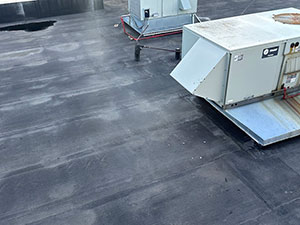
For commercial property owners in Glasgow, KY, a durable, leak-resistant roof protects a long-term investment. One option for low-slope buildings is the rubber roof membrane, also known as EPDM. It has real strengths, but whether it is the right system for a building depends on more than a headline benefits list. Commercial Roofing Pros provides EPDM and other single-ply roofing services in Glasgow, KY. Call (857) 663-7767.
Is EPDM the Right Fit for Your Glasgow Building?
Rather than starting with broad claims about durability, flexibility, or cost, assess the conditions that determine whether EPDM fits the building. Two commercial roofs in Glasgow can call for different systems because of deck condition, drainage, insulation, rooftop equipment, attachment needs, and future service access.
| Factor | What to Check | Conditions That Can Favor EPDM | Conditions That Need More Evaluation |
|---|---|---|---|
| Substrate condition | Structural soundness and condition of the deck | Sound substrate that can support the proposed assembly | Damaged or deteriorated deck that requires repair before membrane selection |
| Drainage and slope | Whether drains, scuppers, and low areas move water as intended | Low-slope roof with functional drainage | Persistent ponding or drainage defects that need correction regardless of membrane choice |
| Attachment method | Deck type, wind exposure, building height, and system requirements | A roof assembly suited to an approved EPDM attachment method | Conditions that require project-specific engineering or a different assembly |
| Insulation | Existing insulation condition and performance goals | Dry, compatible insulation or a planned insulation assembly | Wet, damaged, or inadequate insulation that changes the project scope |
| Rooftop activity | Frequency and location of technician traffic | Manageable traffic with designated protection where needed | Heavy or concentrated traffic that needs additional protection and access planning |
| Detailing complexity | Penetrations, curbs, walls, drains, and rooftop equipment | Details that can be reliably flashed with the selected EPDM system | Complex conditions that require specialized detailing or another design approach |
| Service access | How easily seams, flashing, drains, and equipment areas can be inspected | Reasonable access for future inspection and repair | Restricted access that needs a defined maintenance plan before installation |
What the Contractor Should Confirm
EPDM seams are generally joined with compatible seam tape or adhesive rather than heat welded like TPO or PVC. That matters when repairs are needed later. Patch materials, primers, tapes, and adhesives should be compatible with the installed EPDM system, and the contractor should identify the repair materials and procedures appropriate for the membrane rather than treating all single-ply roofs the same.
Before installation, the contractor should also confirm deck condition, drainage, the proposed attachment method, insulation compatibility, perimeter and penetration details, and any areas of frequent rooftop traffic. Reviewing those items helps separate membrane selection from the installation process itself. For a broader look at common vulnerabilities and maintenance needs across commercial membrane systems, owners can compare how seams, drainage, traffic, and repairs affect long-term roof care.
A Brief Look at EPDM Installation
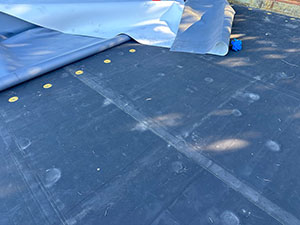
Once EPDM is selected for the building, installation generally includes inspection and preparation of the roof assembly, placement of insulation or cover board where the project requires it, positioning of membrane sheets, attachment using the specified system, and completion of seams and flashing. The exact method depends on the deck, insulation, wind requirements, roof design, and product specifications.
A final quality check should review seams, flashing, penetrations, edges, drainage, and any designated walkway areas. The owner should also receive the project-specific warranty and maintenance information that applies to the installed system. Those closeout details are more useful than assuming every EPDM roof follows the same installation or service-life formula.
How Long Can an EPDM Roof Last?
Commercial Roofing Pros describes single-ply systems as often lasting 20 to 30 years with proper maintenance. That range should be treated as a general expectation rather than a guarantee for an individual building. Actual service life depends on the roof design, installation quality, drainage, weather exposure, maintenance, rooftop traffic, and how quickly seams or flashing issues are addressed.
Maintenance also needs to match the actual roof. Regular inspection of seams, membrane condition, flashing, and drainage can help identify changes before they become larger repairs. Commercial Roofing Pros also offers a commercial roof maintenance program for Kentucky properties.
Rubber Roof Membrane Professionals
Choosing the right roofing system starts with an assessment of the building, not a generic benefits pitch. Substrate condition, drainage, attachment method, insulation, rooftop activity, detailing, repair compatibility, and service access all help determine whether EPDM is a practical choice or whether another single-ply system deserves consideration. Commercial Roofing Pros provides EPDM roofing services in Glasgow, KY. Call (857) 663-7767 to discuss the building and the next appropriate step.
Frequently Asked Questions
Can a rubber roof membrane be installed over an existing roof?
Sometimes, but the existing assembly must be evaluated first. Deck condition, trapped moisture, insulation, existing layers, attachment requirements, and applicable project requirements can all affect whether a recover is appropriate.
Is rubber roofing energy-efficient?
Standard black EPDM is not a reflective white membrane. Energy performance depends heavily on the insulation and overall roof assembly, so efficiency should be evaluated as a system rather than attributed to membrane color alone.
How do you maintain a rubber roof membrane?
Maintenance should include periodic checks of seams, flashing, membrane condition, drainage, and areas exposed to rooftop traffic. The appropriate schedule should reflect the building, roof condition, warranty requirements, and weather events.
Is EPDM installation disruptive for businesses?
Disruption varies with roof size, access, tear-off requirements, equipment coordination, attachment method, and building operations. Ask for a project-specific staging and access plan rather than assuming every installation will affect operations the same way.