

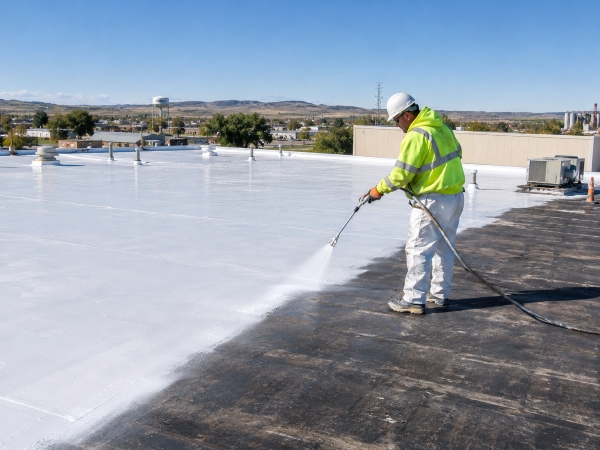
A commercial low-slope roof resists water through a coordinated roof assembly in which the membrane or waterproofing layer, seams, flashings, penetrations and drainage details work together. For building owners and facility managers in Bowling Green, KY, flat roof waterproofing is less about a single product and more about how the membrane, seams, flashings, penetrations and drains work together over the whole surface. Leak investigations often focus on transitions and details where the waterproofing layer is joined, terminated or penetrated, as well as on damaged areas in the roof field.
Commercial Roofing Pros works with single-ply, spray foam and liquid applied roof systems for commercial buildings in Bowling Green. This article explains what waterproofing means on a low slope roof, where it tends to fail, and how the main system routes differ, so a property manager can ask better questions before approving any scope of work.
What Waterproofing Means on a Flat Roof
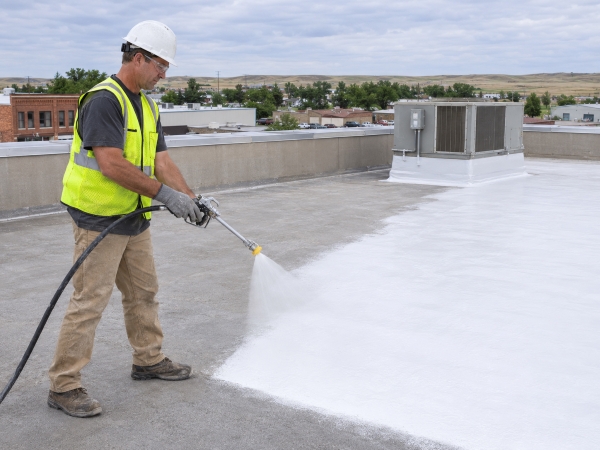
A low-slope roof relies on a continuous membrane or compatible waterproofing system rather than on steep-slope shedding alone, and drainage conditions affect how long water remains on the surface after rain. Because of that, the waterproofing approach must account for the roof field, seams, transitions, penetrations and drainage details as one assembly. Depending on the project, that waterproofing may be provided by a membrane with joined seams, a spray polyurethane foam system with a protective coating, or a liquid-applied restoration system over a suitable existing roof.
Waterproofing is also different from simply sealing a defect. Sealing treats a known problem area. Waterproofing describes the performance of the whole roof assembly. If you are looking at a single failed seam or a cracked flashing joint, the question is closer to the one covered in our guide to flat roof sealing in Bowling Green. If the question is how the entire roof keeps water out, this is the right starting point.
Where Flat Roof Waterproofing Is Most Vulnerable
Because the waterproof layer is continuous, failures cluster at the places where it changes direction or is cut through. These areas deserve the closest attention on any commercial roof.
- Seams. On membrane roofs, seams are joined in the field. A seam that is open, damaged or no longer properly bonded can become a water-entry path.
- Flashings and terminations. Where the roof meets a wall, curb or parapet, the membrane turns upward and must be secured and finished at the top edge. Movement, termination conditions and aging can affect these joints over time.
- Penetrations. Vents, pipes, conduits, rooftop units and supports each cut through the waterproof layer and need a properly detailed seal around them.
- Drains and scuppers. Drain and scupper details can become leak paths when their connections are damaged, and restricted drainage can increase the time water remains on the roof.
- Repairs and patches. Older patches can lose adhesion or become unsuitable when surrounding materials, moisture conditions or surface preparation were not compatible with the repair.
Ponding Water and Drainage
Recurring ponding is an important condition to evaluate on a commercial low-slope roof. Some roofs have low spots from the way they were framed or from deck movement, and water collects there after rain. The effect of recurring ponding depends on the roof system and drainage condition, and it can increase exposure at seams, flashings, coatings and other details.
Before choosing a waterproofing route, the drainage review should distinguish restricted drains from low areas, slope conditions, drain placement or other causes. A membrane or coating scope should not be assumed to correct an underlying drainage or slope problem unless that work is specifically included.
Moisture Below the Surface
A roof can look intact while water is already inside the assembly. Confirmed wet insulation or unsuitable substrate conditions can affect adhesion, attachment and the scope of restoration or replacement work. For that reason, waterproofing decisions should distinguish visible surface conditions from any suspected concealed moisture that may require additional evaluation. A documented commercial roof inspection in Bowling Green records defects, locations and priorities, which gives the property manager something concrete to base a scope on.
Comparing the Main Waterproofing Routes
There is no single waterproofing route that fits every commercial low-slope roof. The appropriate route depends on existing roof condition, moisture, substrate, drainage, attachment, penetrations, compatibility and the intended project scope. The table below summarizes how three common routes differ in how the waterproof layer is formed.
| Route | What forms the waterproof layer | Where it is most often considered | Details that still need attention |
|---|---|---|---|
| Single-ply membrane | Sheets of membrane joined at the seams and tied into flashings | New roofing or reroofing scopes where a single-ply membrane assembly fits the substrate, attachment and project requirements | Seam quality, flashing terminations, penetration boots, drain connections |
| Spray polyurethane foam with protective topcoat | A continuous foam layer sprayed to the roof surface and protected by a coating | Roofs where the substrate, moisture and weather conditions support a spray polyurethane foam system | Substrate dryness, surface preparation, topcoat condition, drain areas |
| Liquid applied coating over a sound roof | A fluid coating that cures into a continuous film over the existing roof | Existing roofs where moisture, substrate, adhesion, drainage and compatibility conditions support a liquid-applied restoration system | Moisture in the assembly, ponding, prior repairs, adhesion to the existing surface |
Single-Ply Membrane
Single-ply systems use factory-made membrane sheets that are joined at the seams and tied into flashings and drain connections. They may be considered for new roofing, recover or reroofing work when the selected assembly fits the existing conditions and project requirements. Seams, attachment, flashings, penetrations and drain details should all be defined in the written scope. You can read more on our single-ply roofing system page for Bowling Green.
Spray Foam With a Protective Topcoat
Spray polyurethane foam is applied as a liquid that expands and cures into a continuous layer, which is then protected with a coating. Because the foam is spray-applied, it can form a continuous layer across irregular shapes and around penetrations, subject to proper substrate, application and coating conditions. Substrate moisture, surface preparation, application conditions and the protective coating are all part of system suitability and ongoing maintenance. Details are on our spray foam roofing page for Bowling Green.
Liquid Applied Coating
A liquid-applied system cures into a continuous film over an existing roof that has been evaluated for restoration suitability. It is a restoration route rather than a full replacement, so candidacy depends on moisture, substrate, adhesion, drainage, existing damage and material compatibility. Our guide to liquid applied roofing in Bowling Green explains when an existing roof is a good candidate and when it is not.
Questions to Ask Before Approving a Waterproofing Scope
A clear scope protects the building owner and makes bids easier to read. Useful questions include the following:
- What is the condition of the current roof, and is additional moisture evaluation needed before the scope is finalized?
- How will seams, flashings, penetrations and drains be treated, not just the open roof area?
- Will any drainage or low-spot problems be addressed, or only the surface layer?
- What surface preparation is included before the waterproof layer is installed?
- How will the finished work be inspected and accepted?
If an active leak or defect is already affecting the building, localized commercial roof repairs in Bowling Green may be part of the immediate scope while a broader waterproofing, restoration or replacement plan is evaluated.
Flat Roof Waterproofing in Bowling Green, KY
For a commercial building in Bowling Green, the waterproofing scope should be based on the existing roof, moisture and substrate conditions, drainage, details and the selected roof system. Commercial Roofing Pros can be reached at (270) 849-6975.
Frequently Asked Questions
Is waterproofing a flat roof the same as sealing it?
No. Sealing treats a specific defect such as a seam or flashing joint, while waterproofing refers to how the entire roof assembly keeps water out.
Which areas of a flat roof leak most often?
Common investigation points include seams, flashings, penetrations, drains and older patches because those areas contain joints, transitions or prior repair materials.
Can a coating waterproof a roof that has wet insulation?
A coating should not be assumed suitable over confirmed wet or otherwise unsuitable underlying materials. Moisture and substrate conditions need to be addressed in the restoration decision.
Does ponding water mean a roof needs replacing?
Not automatically. The cause may involve restricted drains, low areas, slope or drain layout, and the appropriate scope depends on the drainage condition and overall roof assembly.