

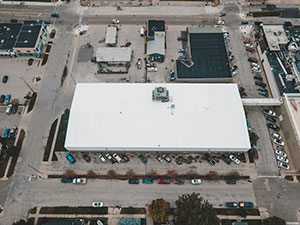
Commercial building owners in Glasgow, KY need more from a roof inspection than a general condition label. A useful commercial roof inspection should leave the owner with evidence that supports the next decision: what was observed, where it was found, what remains uncertain, which items deserve action, and when another review may be needed.
Commercial Roofing Pros provides commercial roof inspections in Glasgow, Kentucky. The inspection findings can help an owner or facility manager decide whether the next step is maintenance, a defined repair, further investigation, or a broader replacement assessment. To discuss an inspection for your facility, call (857) 663-7767.
What a Useful Commercial Roof Inspection Report Includes
The report is what turns roof observations into decision support. It should be specific enough that the building owner can understand the condition found and, when work is recommended, use the documented findings to request a more clearly scoped estimate.
| Report Section | What It Should Show | How an Owner Uses It |
|---|---|---|
| Dated photos | Images tied to specific findings and the inspection date. | Creates a condition record that can be compared with later observations. |
| Defect locations | Findings identified by roof area or recognizable detail, such as a drain, seam, curb, penetration, wall, or edge. | Helps contractors and facility staff return to the same location when planning work. |
| Moisture notes and limitations | What moisture-related evidence was observed, what was confirmed, and what the inspection method could not determine. | Separates confirmed conditions from areas that may need additional investigation. |
| Prioritized actions | Findings grouped by practical priority, such as prompt attention, planned work, or monitoring. | Supports budgeting and scheduling without treating every observation as equally urgent. |
| Reinspection triggers | Conditions that should prompt another evaluation, such as a new leak, significant weather event, or rooftop work by another trade. | Provides a reason to revisit monitored areas instead of relying on a fixed calendar alone. |
A report that only describes a roof as being in fair or poor condition leaves important questions unanswered. Located findings, stated limitations, and clear priorities give the owner a better basis for deciding what to do next.
When Thermal Findings Need Confirmation
If thermal imaging is part of an inspection, temperature differences should be treated as indicators that may justify closer investigation, not as proof by themselves that insulation is wet. Roof materials, surface conditions, shading, weather, and other factors can influence thermal patterns.
If a thermal anomaly could change the repair or replacement scope, ask how it will be confirmed before that conclusion is used for pricing. The appropriate confirmation method depends on the roof assembly, the finding, and the project. The report should distinguish confirmed conditions from screening observations that remain uncertain.
Who Should Receive the Report?
The report should reach the person responsible for roof decisions, such as the owner, property manager, facility director, or another designated project contact. That person can use the findings to coordinate maintenance, request a repair scope, monitor lower-priority conditions, or decide whether a wider evaluation is needed.
When a repair is recommended, the documented location and observed condition can support a more specific estimate. That does not eliminate the possibility of concealed conditions, but it gives the contractor a defined starting point. For follow-through on identified defects, see commercial roof repairs in Glasgow.
Five Conditions an Inspection May Identify
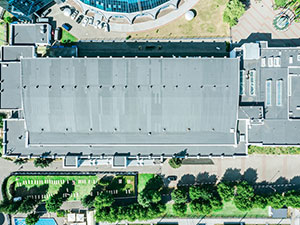
Ponding Water
Standing water that remains after rainfall should be documented by location and duration when that information is available. The next question is why water is remaining there, such as blocked drainage, low areas, or another roof condition. A coating or surface repair should not be assumed to correct an underlying drainage problem.
Small Punctures and Surface Damage
Foot traffic, dropped tools, rooftop service work, and other activity can damage a membrane. Small punctures or abrasions may be difficult to see from a distance, so the report should identify their location and whether surrounding material appears suitable for localized repair.
Flashing and Sealant Defects
Walls, curbs, vents, skylights, roof edges, and other transitions can develop separation, cracking, or failed sealant. Those observations should be tied to the actual detail instead of assuming every nearby interior stain comes from that location.
Blocked or Restricted Drainage
Leaves, debris, or other material can restrict drains and gutters. An inspection can document visible blockage and areas where water is not moving as intended so maintenance or further drainage evaluation can be planned.
Weathering and Surface Deterioration
Ultraviolet exposure, temperature changes, weather, and normal aging can contribute to cracking, brittleness, blistering, or other visible surface changes depending on the roof system. These conditions should be evaluated in context rather than treated as automatic proof that replacement is required.
Reinspection Triggers and Maintenance Planning
Inspection timing should reflect the roof system, current condition, leak history, rooftop activity, weather exposure, and any written maintenance requirements that apply. Certain events can also justify an additional look, such as a new leak, significant storm damage, new rooftop equipment, or repair work by another trade.
Items marked for monitoring should have a reason and a trigger for review. Once findings are documented, a commercial roof maintenance plan can help keep routine tasks and known conditions organized without treating maintenance as a guarantee against future leaks.
Commercial Roof Inspection in Glasgow, KY
A useful commercial roof inspection should leave the owner with documented findings, practical priorities, stated limitations, and a clear basis for the next maintenance, repair, or assessment decision. Commercial Roofing Pros provides commercial roof inspections for Glasgow-area facilities. To discuss an inspection, call (857) 663-7767.
Frequently Asked Questions
Can an inspection prevent the need for roof replacement?
No. An inspection cannot stop normal aging or guarantee that replacement will not be needed. It can identify visible conditions early enough to support maintenance, repair, monitoring, or a broader assessment.
Will a commercial roof inspection disrupt building operations?
That depends on the building and roof access. Many inspections can be completed primarily on the roof, but access, interior observations, or coordination around occupied areas may still need to be arranged.
What should I expect in a roof inspection report?
A useful report should identify where findings are located, document relevant conditions, explain moisture or access limitations, prioritize next actions, and state when another evaluation may be needed.
Does a thermal scan prove that insulation is wet?
No. Thermal imaging can identify areas that deserve closer investigation, but the finding should be interpreted in context and confirmed as appropriate before it changes a repair or replacement scope.