
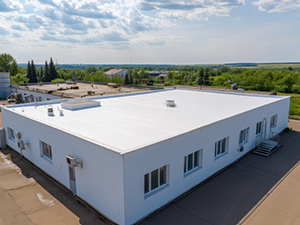
Liquid applied roofing is a coating system that cures on the roof into a seamless membrane, and on a suitable commercial roof in Bowling Green, KY it can provide a protective, water-resistant surface without a full tear-off. The key word is right. A liquid-applied system performs well over a sound, dry, well-drained roof, and it does not fix wet insulation, rotted decking or standing water caused by drainage defects.
Commercial Roofing Pros applies liquid roofing systems for commercial buildings in Bowling Green, KY. This guide explains when an existing roof is a sound restoration candidate, which conditions make coating inappropriate, and how the project should be prepared, applied and checked. To discuss your roof, call (857) 663-7767.
When Is an Existing Roof a Sound Restoration Candidate?
Some existing metal, single-ply and built-up roof assemblies can be candidates if they are structurally sound, dry, sufficiently attached and compatible with the selected coating system. It is applied in layers and conforms to the roof’s shape, so it can seal around penetrations, seams and irregular details more continuously than a patchwork of repairs. Although coating generally adds less material than installing another complete roof assembly, any structural limitations still require project-specific review.
The decision comes down to five conditions. Together they separate roofs that can be restored from roofs that need repair first, or a different solution.
| Condition | Restoration with liquid coating fits | Repair first, then coat | Coating is not appropriate |
|---|---|---|---|
| Moisture | Insulation and deck are confirmed dry in the area proposed for coating | Small wet areas can be cut out and replaced | Insulation is saturated over a wide area |
| Adhesion | The existing surface is firmly bonded and passes adhesion testing | Isolated loose or blistered areas can be repaired to a sound, compatible surface | The membrane is widely delaminated or peeling |
| Substrate | Metal panels, membrane or built-up surface is intact | Rusted fasteners, open seams and small splits can be repaired | Decking is rotted or panels are corroded through |
| Drainage | Drainage functions adequately for the proposed system | Clogged drains and debris can be cleared and corrected | Structural low spots hold water and the cause is not corrected |
| Compatibility | A coating chemistry suited to the existing roof is available | Specified preparation or primer can produce suitable adhesion when verified | No compatible system will bond to the existing material |
Liquid applied roofing does not correct ponding caused by a drainage defect, rotted decking or saturated insulation. A coating placed over those conditions hides them for a while, and the problem continues underneath.
Preparation, Repairs and Application
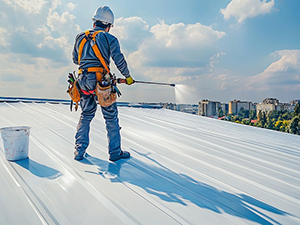
Surface preparation is critical to coating performance, alongside correct material selection, application conditions and ongoing maintenance. A well-run project follows a clear sequence.
- Inspection and moisture check: the roof is inspected and, where appropriate, screened for trapped moisture before a scope is written. Our commercial roof inspection page for Bowling Green describes how findings are documented.
- Cleaning: dirt, mildew, loose material and residue are removed so the coating can bond.
- Repairs: open seams, splits, failed flashing, loose fasteners and damaged areas are corrected first. See our commercial roof repairs in Bowling Green for common repair work.
- Priming and detail work: primers or bonding coats are used where the existing surface requires them, and penetrations, edges and seams receive reinforcement before the main coats.
- Application: the coating is applied in the number of coats and at the thickness the product specifies, in suitable weather. Rain, high humidity or low temperatures during application and cure can compromise the result.
Ask how the work area will be protected during washing and preparation, where runoff will be managed, and when rooftop equipment can safely return to normal use. The proposal should also identify surfaces that will not receive coating and describe how those transitions will be detailed.
Choosing a Coating Type
Acrylic, silicone and polyurethane are common liquid-applied chemistries, and each behaves differently. Some handle ponding water better, some bond more easily to certain surfaces, and some are chosen for abrasion resistance or reflectivity. The right choice depends on the existing roof, drainage, foot traffic and exposure, so the contractor should explain why the selected product suits your roof. A product described as suitable for occasional standing water is not a substitute for correcting blocked drains or structural low spots. The commercial roof coatings page for Bowling Green covers coating candidacy from the building owner’s side.
Realistic Expectations on Lifespan, Reflectivity and Savings
Liquid applied roofing can add service life to a sound roof, but how much depends on the existing roof, the coating system, the thickness applied, drainage and maintenance, so no fixed number of years can be promised. Reflective coatings can reduce the heat a roof absorbs, which may ease cooling demand, but the effect on utility bills depends on insulation, HVAC equipment and how the building is used. Reflectivity can also decline as the surface collects dirt. Treat any savings figure as an estimate to test against your own utility bills.
Acceptance and Follow-Up Inspection
Before accepting the work, request a documented closeout review from the contractor rather than accessing the roof yourself. Check that seams, penetrations and edges are fully covered, that there are no thin spots, pinholes or uncured areas, and that drains are clear and water is flowing correctly. Ask for documentation of the products used and the work performed. Agree on a follow-up inspection schedule suited to the installed system, roof conditions and any written maintenance requirements. The Commercial Roofing Pros maintenance program includes routine inspections and seasonal preparation for Kentucky businesses.
If the main concern is a specific leak rather than the whole roof, flat roof sealing in Bowling Green explains when targeted sealing is enough.
Liquid Applied Roofing in Bowling Green, KY
Commercial Roofing Pros serves commercial property owners in Bowling Green, KY. If you are weighing coating, repair or replacement for your roof, call (857) 663-7767 and describe the roof type, its age and any leaks or ponding you have noticed.
Frequently Asked Questions
What is liquid applied roofing?
It is a roof coating applied as a liquid that cures into a seamless membrane over an existing roof that is suitable for coating.
Can it be applied over my current roof?
Often, if the roof is dry, well adhered, structurally sound and compatible with the coating. Wet insulation, rotted decking and widespread delamination rule it out until corrected.
How long does a liquid applied roof last?
It depends on the existing roof, the coating system, thickness, drainage and maintenance. No fixed lifespan can be promised without assessing the roof.
Does it help reduce energy costs?
A reflective coating can reduce heat absorbed by the roof and may ease cooling demand, but the actual savings depend on insulation, HVAC equipment and building use.