
Energy efficient roofing for a commercial building in Elizabethtown, KY comes down to three things working together: a roof surface that reflects sunlight, insulation that slows heat moving through the roof, and an installation that stays watertight and sealed. A reflective membrane or coating can reduce the heat a roof absorbs in summer, but the savings a building actually sees depend on its insulation, HVAC equipment, use and roof condition.
Commercial Roofing Pros provides commercial roofing for properties in Elizabethtown, KY. This guide explains how energy efficient roofing works, where the evidence is strong and where it is limited, and how to judge whether a reflective roof, added insulation or a coating makes sense for your building. To discuss your roof, call (857) 663-7767.
Energy Efficient Roofing ROI and Long Term Savings
Return on investment for a roof is harder to calculate than for most building upgrades, because the roof has to keep water out first and save energy second. A sound way to think about ROI is to ask what the energy improvement adds on top of work the building needs anyway, such as a re-roof, a restoration coating or an insulation upgrade.
How Energy Efficient Roofing Works
Reflective roof surfaces, such as light-colored single-ply membranes and reflective coatings, send more sunlight back into the sky instead of absorbing it. That lowers the surface temperature of the roof and reduces the heat that moves into the building below. Insulation does a separate job: it slows heat flow in both directions, which matters in Kentucky because buildings here have both cooling and heating seasons. Air leakage through gaps in the building envelope can also affect energy use; roof-to-wall transitions and penetrations need appropriate air and water control details.
Reduced Heating and Cooling Demands
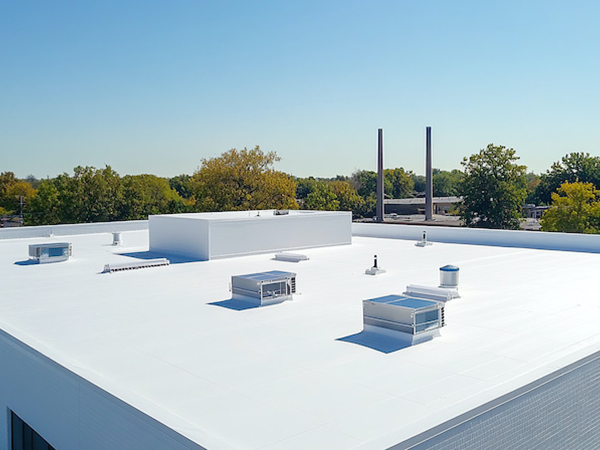
A cooler roof surface can reduce cooling demand, especially on single-story buildings with large roof areas relative to their walls, such as warehouses, retail stores and light industrial buildings. The effect is smaller on multi-story buildings, and it is smaller still where the roof is already well insulated. A reflective surface may also reduce some free solar heat in winter, so the net result over a full year depends on the building. No reputable contractor can promise a specific percentage savings without knowing the building.
Which Materials Fit
Light-colored single-ply membranes such as TPO roofing in Elizabethtown and PVC are commonly chosen for reflectivity, and a reflective coating can bring an existing roof closer to the same goal when the roof is a good restoration candidate. Our roof coating page for Elizabethtown describes that option, and the single-ply roofing page looks at how membrane choice relates to building energy use. Spray foam is a different approach because it adds insulation value while forming a continuous surface. Commercial Roofing Pros works with spray foam, coatings and single-ply roofing, allowing owners to discuss different assemblies for their specific roof.
What the Evidence Supports and Where It Is Limited
The table below separates what is generally well supported from what depends on the individual building. Use it to test any proposal you receive.
| Claim | What is generally supported | Limits and what to check |
|---|---|---|
| Reflective roofs run cooler | Light, reflective surfaces absorb less solar heat than dark ones | Dirt, ponding and age reduce reflectivity over time, so ask about cleaning and the product’s published reflectivity values |
| Lower cooling demand | Less heat enters the building through the roof, which can ease air conditioning load | Size depends on insulation, building height, HVAC efficiency and how the space is used |
| Added insulation saves energy | Better insulation slows heat flow in summer and winter | Wet or compressed insulation performs poorly and may need replacement |
| Less heat stress on the roof | Cooler surfaces see smaller temperature swings | Does not replace maintenance, and no fixed lifespan gain can be promised |
| Payback | Energy savings add value on top of a needed roof project | Payback should be estimated from your utility bills, not a generic figure |
Practical Observations for Building Owners
- Look at the roof area first. Buildings with a large roof compared with their walls tend to gain the most from a reflective surface.
- Review the summer utility bills. If cooling is a large part of the bill, roof surface and insulation deserve a closer look.
- Check for hot spots inside. Rooms directly under the roof that run warm may warrant checking insulation, air leakage and HVAC distribution rather than assuming the roof alone is responsible.
- Do not ignore leaks. Moisture in insulation reduces its performance, so a leak is also an energy problem.
- Keep rooftop equipment in mind. HVAC units, ducts and curbs affect air tightness and the details that need sealing.
How a Contractor Should Assess Your Roof
A useful assessment goes beyond the surface color. It should identify the existing roof type and age, check for wet or damaged insulation, review drainage and ponding, look at flashing and penetrations and note how the building is used. Where thermal imaging is appropriate, temperature patterns can guide further investigation, but they do not establish wet insulation without confirmation. The result should be a written scope that compares options, such as a coating, a recover or a full replacement, and states what each does and does not change. Our commercial roof inspections in Elizabethtown are a practical starting point.
Signs It Is Time to Act
- The roof is near the end of its service life and a re-roof is already being planned.
- Summer cooling costs are high and rooms under the roof stay warm.
- A dark or worn surface is reaching the point where a restoration coating is being considered.
- Inspections show wet or deteriorated insulation.
- The building is changing use or adding equipment that increases cooling needs.
Maintenance can help preserve roof condition and reflectivity, although energy performance also depends on the building and equipment. The Commercial Roofing Pros maintenance program includes routine inspections and seasonal preparation for Kentucky businesses.
Energy Efficient Roofing Experts
Choosing a contractor who plans for Kentucky’s weather and your building’s specific needs helps keep the work practical. Commercial Roofing Pros provides commercial roofing for properties in Elizabethtown, KY, and can help compare reflective membranes, coatings, spray foam and insulation options for your building. To talk through your roof and goals, call (857) 663-7767.
Frequently Asked Questions
What makes a roofing system energy efficient?
A reflective surface, effective insulation and a tight, well-sealed installation all contribute. The combination matters more than any single feature.
How can energy efficient roofing reduce operating costs?
It can reduce the heat entering the building and the load on cooling and heating equipment, which may lower energy use. The amount depends on the building and cannot be promised in advance.
Does energy efficient roofing improve roof lifespan?
A cooler roof surface can reduce heat stress on roofing materials, but lifespan also depends on installation quality, drainage and maintenance. No fixed gain can be promised.
Can an existing roof be made more energy efficient without replacing it?
Sometimes. If the roof is a sound restoration candidate, a reflective coating can be an option, but wet insulation or widespread damage may rule it out. An inspection confirms which applies.