

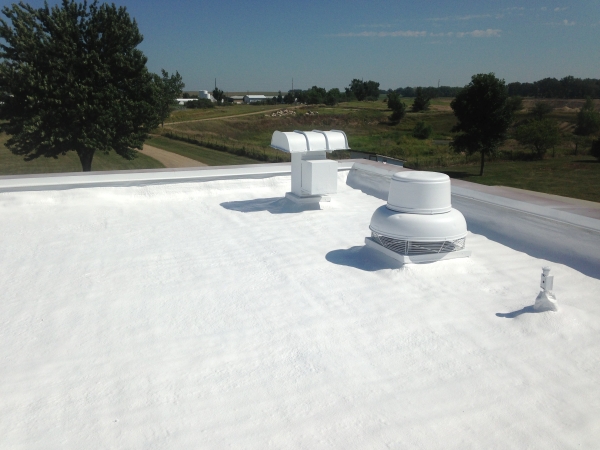
Spray foam roofing in Campbellsville, KY uses liquid polyurethane components that are applied to a commercial roof, expand into a continuous insulating layer, and are protected with a compatible topcoat. When the existing roof, substrate, moisture condition, drainage, and application requirements are suitable, the system can add insulation and create a continuous surface. Wet insulation, deteriorated decking, active structural problems, or incompatible surfaces have to be addressed before the system is considered.
Commercial Roofing Pros installs spray foam roofing systems for commercial buildings across Kentucky, including Campbellsville. This guide explains how spray foam works, when it fits, what has to be true of the existing roof, how application should be handled, and how the finished roof is maintained.
How Spray Foam Roofing Works
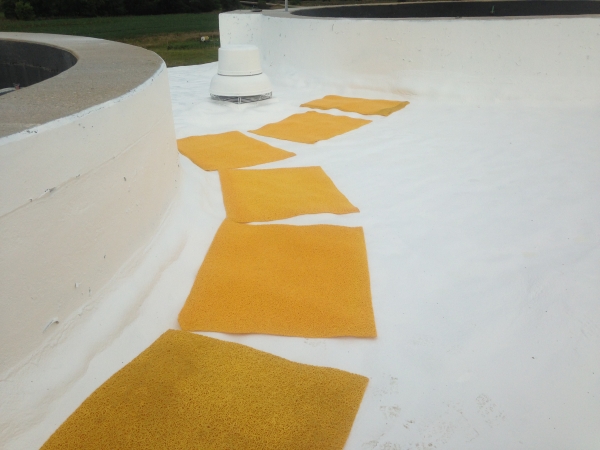
Spray foam roofing starts with two liquid components that are mixed at the spray gun. They react and expand into a rigid, closed-cell foam that is intended to bond to a properly prepared roof surface. Because the material is spray-applied, it can conform around penetrations, curbs, and irregular details without the field seams used in sheet membranes. The foam also acts as insulation, which is one of the reasons owners consider it.
Foam by itself is not the finished roof. Exposed polyurethane foam requires a compatible protective coating. The topcoat helps protect the foam from ultraviolet exposure and weather, so inspection and maintenance of that surface are part of the system’s ongoing care.
When Spray Foam Is a Good Fit
- The existing roof is sound and dry. Foam may be installed over some existing commercial roof surfaces when the specific substrate, attachment, moisture condition, preparation, and product requirements support that application.
- Insulation is a goal. The foam adds insulation value, and the amount depends on the thickness applied and the product used.
- The roof has complicated details. Spray application can conform around penetrations, curbs, and irregular details without requiring field sheet seams in those areas.
- Tear-off should be limited. Where the existing assembly is suitable to remain, a recover approach may reduce the amount of tear-off compared with full replacement.
- Drainage can be improved. Because spray foam can be applied at varying thicknesses, it may help address limited surface transitions or minor low areas when the design supports it, but it is not a substitute for correcting structural drainage defects.
When Spray Foam Is Not the Right Answer
Spray foam is not a cure-all. Known wet or saturated materials within the existing roof assembly need to be addressed before foam is applied. The repair scope should identify how moisture-affected materials are removed, isolated, or otherwise handled before the new system is installed. Deteriorated decking, severely corroded metal, widespread delamination, or other unsuitable substrate conditions also need correction before application. Roofs with frequent service traffic may need designated walkways or other protection because repeated traffic can damage the coated foam surface. If the existing assembly is not a suitable recover candidate because of widespread moisture, attachment, substrate, drainage, or structural conditions, replacement may need to be compared.
Moisture in the roof assemblyDry, or with limited moisture-affected areas that can be addressed within the planned scopeBroad moisture involvement requires a wider removal, replacement, or redesign decisionDecking and structureDeck and substrate conditions suitable for the proposed systemDeteriorated decking or severe corrosion must be addressed before application
| Roof condition | Spray foam fits | Address first or consider another system |
|---|---|---|
| Moisture in the roof assembly | Dry, or with limited moisture-affected areas that can be addressed within the planned scope | Broad moisture involvement requires a wider removal, replacement, or redesign decision |
| Surface and adhesion | Clean, firmly attached surface | Loose, blistered or contaminated areas need removal and cleaning |
| Decking and structure | Deck and substrate conditions suitable for the proposed system | Deteriorated decking or severe corrosion must be addressed before application |
| Drainage | Limited surface transitions that the designed foam thickness may help address | Recurring ponding tied to slope, structure, or drainage design needs a broader correction |
| Traffic and equipment | Limited, planned access with protection where required | Frequent traffic may require protected walkways or another system better suited to the access pattern |
How Application Should Be Handled
Spray foam is sensitive to conditions at the time of installation, so how the work is planned matters as much as the product.
- Weather window: temperature, humidity, wind, substrate temperature, and surface moisture can affect application and adhesion. Installation should follow the product and contractor requirements for acceptable conditions, including weather delays when needed.
- Surface preparation: the roof surface is prepared and necessary repairs are completed before spraying, with preparation matched to the substrate and product requirements.
- Protecting the property: overspray can affect nearby vehicles, windows, equipment, and neighboring surfaces, so the work plan should include appropriate masking, containment, and wind controls.
- Uniform thickness: foam is applied to the specified system thickness, with the contractor using appropriate quality-control checks for the installed work.
- Protective topcoat: the compatible protective coating is applied according to the selected system requirements, including details at edges, penetrations, curbs, and transitions.
- Occupant planning: the project plan should address building access, occupied-area restrictions, ventilation needs, and any product-specific precautions that apply during installation.
Maintaining a Spray Foam Roof
Because the topcoat protects the foam, maintenance focuses on the surface. Inspections can look for coating wear, punctures, impact damage, drainage conditions, and changes at penetrations, curbs, edges, and other details. Localized damage may be repairable when the surrounding foam and coating remain suitable, while unrepaired openings can expose the underlying foam to weather. Regular inspections and seasonal preparation help, and the roof maintenance schedule for Campbellsville describes a practical routine. Owners can also review the commercial roof inspection page for Campbellsville to see how findings are documented.
Spray Foam Compared With Other Options
Spray foam is one of several ways to restore or replace a low-slope roof. A compatible coating may restore some suitable existing roofs without adding the same insulation layer as spray foam, and our commercial roof coatings page for Campbellsville explains how candidacy is evaluated. Single-ply membranes such as TPO, PVC, and EPDM use sheet materials and field seams, and may fit different roof conditions, detailing requirements, and project scopes. The low slope roofing page for Campbellsville discusses how low-slope systems relate to energy use. Compare written scopes rather than price alone, including substrate preparation, proposed foam thickness, coating system, repairs, detailing, access protection, and exclusions.
What to Ask a Spray Foam Contractor
- How is moisture in the existing roof checked, and what happens if wet insulation is found?
- What thickness of foam is proposed, and how will it be verified?
- What protective coating system is proposed, and what application requirements are included?
- How will weather, overspray and occupant access be managed?
- What inspection, maintenance, and future recoating expectations are included with the proposed system?
- What documentation will be provided?
Spray Foam Roofing in Campbellsville, KY
Commercial Roofing Pros serves commercial property owners in Campbellsville, KY and across Kentucky. You can review the Campbellsville location page and the spray foam roofing systems page for more on the service and the information the contractor may need about the existing roof.
Frequently Asked Questions
Can spray foam be applied over my existing roof?
Sometimes, when the existing roof, substrate, attachment, moisture condition, drainage, and product requirements support a recover application. Unsuitable or moisture-affected materials must be addressed first.
Does spray foam need a coating on top?
Yes. A compatible protective coating is part of the roof system, and its condition should be included in ongoing inspection and maintenance.
Does spray foam add insulation?
Yes. The foam adds insulation value, and the amount depends on the installed thickness and product used. Building-level energy performance depends on the full assembly and operating conditions.
How long does spray foam roofing take to install?
It depends on roof size, preparation, repairs, access, product requirements, and weather. Conditions outside the installation limits can delay spraying, so scheduling should account for those variables.