


Spray foam roofing suits a commercial roof in Elizabethtown, KY when its existing assembly is suitable, the application surface is dry and sound, drainage is addressed, and the foam receives its specified protective coating. Spray polyurethane foam (SPF) is applied as a liquid that expands into a continuous insulating layer, which removes sheet seams across the open roof. It still depends on good preparation, careful details and ongoing coating care.
Commercial Roofing Pros installs commercial spray foam roofing systems for properties in Elizabethtown. This guide explains the conditions that decide whether SPF fits your roof, how it differs from membrane systems, and how it is inspected and maintained. To discuss your building, call (857) 663-7767. Related pages cover commercial roofing services in Elizabethtown and flat roof repair in Elizabethtown.
How Spray Foam Roofing Works
SPF is sprayed onto a prepared roof surface in controlled passes that expand and cure into rigid foam. When applied to a compatible assembly, the foam can conform to curbs, equipment supports and irregular shapes without sheet laps across the main roof area. The foam is not the completed coated roof assembly. The specified protective coating shields the foam from ultraviolet exposure and weather; its application and eventual maintenance are integral to the system.
Is Your Roof a Good Candidate for Spray Foam?
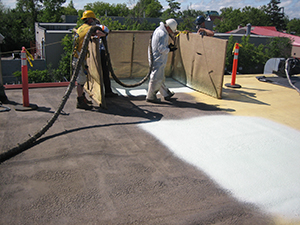
Spray foam is not suitable for every roof. The conditions below largely decide whether it fits and what preparation is needed.
| Condition | What is checked | Why it matters for spray foam |
|---|---|---|
| Substrate moisture | Moisture screening and a dry surface at application | Foam applied over wet material can trap moisture; wet insulation is addressed first |
| Surface preparation and adhesion | Cleaning, removal of loose or failed material, and compatibility with the existing roof | The foam is only as secure as the surface it bonds to |
| Drainage and details | Slope, drains, curbs, penetrations and edges | Drainage must be designed and verified; foam placement alone is not a guaranteed correction, and details require careful finishing |
| Application conditions | Temperature, humidity, wind and surface dampness against the manufacturer’s limits | Poor conditions can compromise foam quality, so weather delays are planned for |
| Surroundings and overspray | Vehicles, HVAC intakes, glass, neighboring property and occupants | Masking, wind monitoring and access control reduce the risk of overspray |
| Protective coating | Coating type and thickness specified for the foam | The coating shields the foam from UV and weather and is a required part of the system |
Where moisture, adhesion or structural problems are found, the scope must address those conditions before any SPF recover is considered. Depending on their extent, removing unsuitable roof materials or choosing a different system may be necessary.
Spray Foam Compared With Membrane Systems
Built-up, modified bitumen and single-ply membrane roofs use layers or sheets with system-specific seams and flashing details. SPF removes sheet seams but depends on the foam and coating staying intact. SPF also adds insulation value as part of the roof, whereas membranes usually rely on separate insulation. The right choice depends on the roof deck, existing insulation, rooftop traffic, drainage and budget. For a membrane-focused comparison, see our guide to single-ply roofing systems in Elizabethtown.
Energy effects depend on the foam thickness, the building envelope, HVAC equipment and the coating’s reflectivity, so projected savings should be treated as estimates and the contractor should explain how they were calculated.
Application Planning for an Occupied Building
Application is weather-dependent and produces overspray risk, so planning matters. Ask how the contractor will protect vehicles, air intakes and nearby property, how it will monitor wind and surface dampness, and when occupants may need to limit access to affected areas. The manufacturer’s guidance on ventilation and re-entry should be followed. A written plan for staging, access and schedule changes keeps surprises to a minimum.
Inspection, Puncture Repair and Recoating
Foam and coating can be damaged by foot traffic, dropped tools, hail or debris, and punctures that expose foam can compromise the roof if left unrepaired. A planned commercial roof inspection in Elizabethtown checks the coating, penetrations, drains and any damaged areas. Repair methods for punctures, blisters and worn coating areas depend on the extent of damage and the specified foam and coating system. Coating renewal intervals depend on observed condition and the written system requirements. The commercial roof maintenance page for Elizabethtown explains routine care.
Questions to Ask Before Choosing Spray Foam
- What is the substrate, and has moisture been checked? The scope should state how moisture was assessed and what further investigation is needed, if any.
- Which foam and coating products are specified? Ask for the products and data sheets specified for this system, not simply “spray foam.”
- What thickness and number of passes are planned? The specification should state them in writing.
- How are drains, penetrations and edges finished? Details are common leak points on any system.
- What are the limits for weather and re-entry? The plan should reflect the manufacturer’s conditions.
- Who maintains the coating, and how often is it inspected? Written expectations help protect warranty terms where they apply.
Spray Foam Roofing Professionals in Elizabethtown, KY
Commercial Roofing Pros installs commercial roofing systems, including spray foam, for properties in Elizabethtown. If you are weighing SPF against a membrane, call (857) 663-7767 and describe the roof type, its condition and any leaks or ponding.
Frequently Asked Questions
What is the main advantage of commercial spray foam roofing?
It forms a continuous insulating layer without sheet seams. It still needs a dry, sound substrate, careful details and a maintained protective coating.
Can spray foam be applied over any roof?
No. The substrate and assembly must be evaluated for moisture, attachment and structural suitability. Unsuitable materials or drainage conditions need a defined correction before application.
Why does spray foam need a protective coating?
The coating protects the foam from ultraviolet exposure and weather. It is a required part of the specified coated SPF system and needs inspection and condition-based maintenance or renewal.
Are membrane roofing systems still a reliable choice?
Yes, when they are well specified, installed and maintained. The better option depends on the roof, its condition, traffic and budget.