
If you manage or own a commercial property in Elizabethtown, KY, you will eventually face a roofing decision that comes down to three letters: TPO, EPDM, or PVC. These are the three dominant single-ply roofing system types used on flat and low-slope commercial roofs today. Each has genuine strengths, and none is universally best. Understanding the differences helps you ask better questions and make a more informed investment.
Partner with Commercial Roofing Pros for better long-term results. Call 857-663-7767 today and schedule your consultation.
Single-Ply Roofing System: Which is Best?
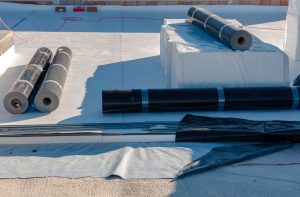
Single-ply roofing refers to flexible membrane sheets that are installed in one layer over a roofing assembly. They are manufactured in large rolls, then adhered, mechanically fastened, or ballasted (held down with gravel or pavers) across the roof deck. Compared to built-up roofing systems that rely on multiple layers of asphalt, single-ply membranes are faster to install, lighter in weight, and easier to inspect and repair.
TPO (Thermoplastic Polyolefin)
TPO has become the most widely installed commercial roofing membrane in North America over the past two decades. It is a white or light-colored thermoplastic material that reflects solar energy, which can meaningfully reduce cooling loads in summer months. That reflectivity has made it a popular choice for buildings seeking Energy Star certification or LEED credits.
TPO seams are heat-welded, which creates a bond that is generally stronger than the membrane itself when done correctly. This is a key quality advantage over adhesive-bonded systems.
Considerations: TPO formulations have varied significantly between manufacturers over the years. Thicker membranes (60 mil and above) tend to outperform thinner options. Installation quality heavily determines long-term performance.
Best suited for: Buildings prioritizing energy efficiency, budgets in the mid-range tier, and roofs in climates with hot summers.
 EPDM (Ethylene Propylene Diene Monomer)
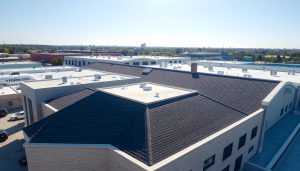
EPDM is a synthetic rubber membrane that has been used on commercial roofs since the 1960s. Its track record is longer than any competing single-ply product, and properly installed EPDM roofs regularly reach 25 to 30 years of service life.
It is typically black, which means it absorbs heat rather than reflecting it. In Kentucky’s climate, that can increase summer cooling costs. White-coated EPDM options exist but add cost. EPDM is bonded with adhesives or tape at seams, which are historically the most common source of leaks as buildings age.
Considerations: Seam adhesives can degrade over time, particularly in areas with temperature swings or ponding water. Regular inspections are worthwhile.
Best suited for: Owners who prioritize longevity and a proven product, particularly on roofs with less foot traffic and good drainage.
PVC (Polyvinyl Chloride)
PVC membranes share TPO’s heat-welded seam technology and reflective surface, but they offer stronger resistance to chemicals, grease, and oils. This makes PVC the preferred choice for restaurant rooftops, food processing facilities, and any building where rooftop equipment exhausts fats or solvents.
PVC is typically the most expensive of the three options, but on the right building, that premium is justified by durability under conditions that would degrade TPO or EPDM.
Considerations: PVC contains plasticizers that can migrate out of the membrane over time, which may cause brittleness in older installations. It also has a higher environmental footprint in manufacturing compared to TPO.
Best suited for: Food service, industrial, or chemical-adjacent applications where chemical resistance is a priority.
Side-by-Side Summary
| TPO | EPDM | PVC | |
| Typical cost | Mid | Low-Mid | High |
| Seam method | Heat-welded | Adhesive/tape | Heat-welded |
| Solar reflectivity | High | Low (black) | High |
| Chemical resistance | Moderate | Low | High |
| Track record | 20+ years | 50+ years | 40+ years |
| Best climate fit | Hot summers | Varied | Varied |
A Note on Installation
Central Kentucky’s climate brings cold winters, hot and humid summers, and variable spring weather. All three single-ply roofing system membranes perform in this region, but TPO and PVC’s reflective surfaces offer a practical advantage during the summer cooling season. Freeze-thaw cycles also make seam integrity especially important, which is an argument for heat-welded membranes over adhesive-bonded systems.
Elizabethtown Single-Ply Roofing System Experts
Working with Commercial Roofing Pros ensures the membrane choice is matched to your specific roof deck, drainage conditions, building use, and budget needs.
To learn more, call 857-663-7767 and speak with a single-ply expert today.
FAQ
How long do single-ply roofs typically last?
With proper installation and maintenance, TPO and PVC membranes generally last 20 to 30 years. EPDM has the longest documented track record and can exceed 30 years on well-maintained roofs.
Does membrane thickness matter?
Yes, significantly. A 60-mil membrane will outperform a 45-mil membrane of the same material in puncture resistance and long-term weathering. Thicker membranes cost more upfront but often reduce repair frequency.
Can a single-ply roof be installed over an existing roof?
In many cases, yes. A re-cover installs new membrane over existing material, avoiding tear-off costs and keeping old material out of landfills. However, it requires a dry, structurally sound existing assembly and may not be permitted if multiple layers are already present.