
EPDM roofing is one single-ply option for low-slope commercial buildings in Campbellsville, KY. Whether it fits a specific property depends on the existing deck, drainage, insulation, attachment method, rooftop activity, detailing, and future service access, not only on broad claims about durability or energy performance.
Commercial Roofing Pros serves Campbellsville commercial properties and works with EPDM within its confirmed single-ply scope. Before recommending the membrane, the contractor should identify the roof assembly, document conditions that affect installation, and confirm that the proposed attachment, seams, flashing, and repair materials are compatible with EPDM. Call (857) 663-7767 to discuss the building and roofing options.
What Is EPDM Roofing?
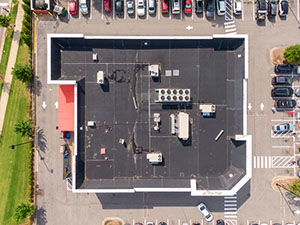
EPDM stands for ethylene propylene diene monomer, a synthetic rubber membrane used on many flat and low-slope commercial roofs. It remains flexible across changing temperatures and is commonly joined with compatible primers, tapes, adhesives, patches, and flashing materials rather than the hot-air-welded seams used on thermoplastic membranes such as TPO and PVC.
That material difference matters during both installation and repair. A contractor evaluating EPDM should confirm the substrate, attachment method, seam details, penetrations, flashing, drainage, and any existing moisture before deciding whether EPDM fits the building.
Is EPDM a Good Fit for This Building?
| Factor | What to Confirm | What It Means for EPDM |
|---|---|---|
| Substrate condition | Deck stability, moisture, deterioration, and preparation needs | EPDM needs a suitable prepared substrate. Damaged or wet materials may require repair or removal before membrane work begins. |
| Drainage | Slope, drains, scuppers, and areas where water remains after rain | Membrane selection does not correct an underlying drainage problem. Chronic ponding should be evaluated separately. |
| Attachment method | Deck type, wind design, assembly requirements, and whether an adhered, mechanically attached, or other approved approach fits | The attachment method should be selected for the roof assembly rather than assumed from the membrane name alone. |
| Insulation | Existing condition, moisture, thermal goals, and compatibility with the proposed assembly | Insulation needs can change the complete roof design and should be resolved before the membrane scope is finalized. |
| Rooftop activity | Foot traffic, service routes, HVAC work, and equipment access | Higher traffic may require planned protection and service paths. It does not automatically rule EPDM in or out. |
| Detailing complexity | Curbs, penetrations, walls, transitions, edges, and other roof details | The contractor should confirm that EPDM-compatible details can be installed and serviced at the actual roof conditions. |
| Service access | How inspections, maintenance, and future repairs will reach the roof safely | Access affects maintenance planning and protection details, but it should be evaluated with the whole roof rather than treated as a stand-alone material decision. |
Black and White EPDM Roofing Options
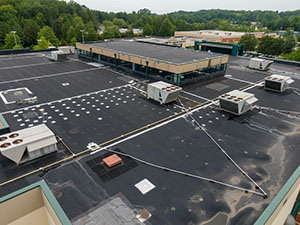
Black and white EPDM can create different roof-surface heat conditions. Black EPDM absorbs more solar heat, while white EPDM reflects more sunlight. That difference may matter to a building owner, but membrane color alone does not determine utility savings or indoor comfort. Insulation, HVAC performance, occupancy, air leakage, roof assembly, and operating conditions also affect energy use.
A roof inspection can help document existing conditions before a membrane decision is made. Visual inspection may be supplemented by additional moisture investigation when conditions warrant it, but the need and method should follow the roof rather than be assumed for every project.
Installation and Long-Term Roof Care
EPDM installation starts with a substrate and assembly that are suitable for the selected system. The contractor should confirm preparation, insulation, attachment, flashing, penetrations, and seam construction before installation is accepted. EPDM seam quality depends on compatible primers, tapes, adhesives, and detailing used according to the selected system requirements.
Drainage also matters after installation. Standing water, blocked drains, punctures, open seams, or damaged flashing can affect any low-slope roof. Inspection frequency should follow the roof condition, building use, weather exposure, prior findings, and any applicable manufacturer or contractor requirements rather than one fixed schedule.
EPDM repairs should use materials made for and compatible with the existing membrane. A localized puncture, seam issue, or flashing defect may support a targeted repair when surrounding materials remain serviceable. If moisture, substrate deterioration, or repeated defects extend beyond one area, the contractor should broaden the assessment rather than assume a small patch is enough.
Why EPDM Roofing Fits Some Campbellsville Commercial Buildings
EPDM can be a practical choice for commercial roofs that have a suitable deck, workable drainage, compatible insulation and attachment details, manageable rooftop activity, and serviceable access. It should not be selected only because of a general reputation for durability, flexibility, or low maintenance.
Building owners comparing EPDM with other systems can use Commercial Roofing Pros’ single-ply systems information for broader material context. If the decision is part of a larger roofing project, compare the complete assembly, investigation, exclusions, and future service needs rather than the membrane name alone.
Professional EPDM Roofing Services in Campbellsville
Commercial Roofing Pros provides EPDM within its commercial single-ply roofing scope in Campbellsville, KY. A sound recommendation should connect the membrane choice to the actual substrate, drainage, attachment, insulation, traffic, detailing, and access conditions on the building.
Call (857) 663-7767 to discuss EPDM roofing for a Campbellsville commercial property.
Frequently Asked Questions
How long can EPDM roofing last on a commercial building?
There is no single lifespan for every roof. Service life depends on substrate condition, installation, drainage, weather exposure, roof traffic, repairs, and maintenance.
Is black or white EPDM better for Kentucky buildings?
It depends on the building. Black EPDM absorbs more solar heat and white EPDM reflects more, but actual energy performance also depends on insulation, HVAC operation, air leakage, occupancy, and the roof assembly.
Can EPDM be repaired instead of replaced?
Often, when the defect is localized and surrounding materials remain serviceable. Repairs should use EPDM-compatible primers, tapes, adhesives, patches, and flashing materials appropriate to the existing system.
What should a contractor confirm before recommending EPDM?
The assessment should cover substrate condition, drainage, attachment method, insulation, rooftop activity, detailing, service access, and the compatibility of the proposed seams, flashing, and future repair materials.