

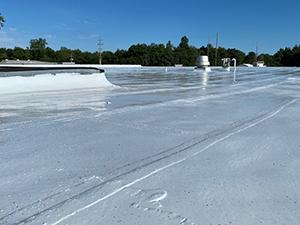
Energy efficient roofing in Campbellsville, KY is not one product or one guaranteed savings number. It is a combination of roof surface, insulation, membrane or coating choice, building condition, and HVAC performance that can reduce heat gain and cooling demand when the roof is a good candidate. The practical decision is whether the existing roof can be improved, needs repair first, or is better addressed during a larger roofing project.
Commercial Roofing Pros provides commercial roofing services throughout Kentucky, including Campbellsville. A useful energy-efficiency assessment should start with the current roof condition and the building’s operating needs rather than assume that a reflective surface or added insulation will produce the same result on every property. Call 857-663-7767 to discuss the roof and the next assessment step.
Understanding Energy Efficient Roofing
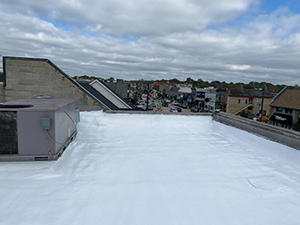
Energy efficient roofing can involve several different components. A reflective coating can reduce solar heat absorbed at the roof surface. Reflective single-ply membranes can serve a similar purpose on an appropriate roof assembly. Insulation affects how quickly heat moves between the roof and the occupied building. Each component addresses a different part of the building envelope, so the right choice depends on what the existing roof already has and what problem the owner is trying to solve.
- Cool roof coatings: reflective coatings may reduce roof-surface heat gain when the existing roof is suitable for restoration.
- Insulation: insulation can reduce heat transfer, but the benefit depends on the existing assembly, actual installed R-value, moisture condition, and continuity of the insulation layer.
- Reflective membranes: TPO and PVC are single-ply options that can provide a light-colored, reflective roof surface when replacement or reroofing is otherwise appropriate.
Commercial Roofing Pros’ single-ply systems and commercial membrane systems pages provide related background on those roof types.
What the Evidence Supports and What It Does Not
U.S. Department of Energy guidance on cool roofs supports the basic principle that higher solar reflectance can lower roof-surface temperature and reduce cooling load. It also emphasizes that actual energy savings depend on factors such as climate, existing insulation, roof type, and HVAC efficiency. That makes building-specific assessment more useful than applying a generic percentage to every property.
| Evidence or Claim | What It Supports | Important Limitation |
|---|---|---|
| Reflective roof surfaces can stay cooler in sunlight | A reflective surface can reduce solar heat absorbed by the roof | Lower surface temperature does not guarantee a specific indoor temperature or utility-bill reduction |
| Insulation reduces heat transfer | Improving a weak insulation layer can reduce heat flow through the roof assembly | Actual results depend on installed R-value, continuity, moisture condition, and the rest of the building envelope |
| Reflective membranes are available for commercial roofs | TPO or PVC can provide a reflective surface as part of a suitable single-ply roofing project | The roof still needs to meet structural, moisture, drainage, attachment, and system requirements for the selected assembly |
Signs an Energy-Efficiency Review May Be Useful
High summer cooling costs, uncomfortable upper-level spaces, an aging dark roof surface, or an upcoming repair, coating, or replacement decision can all be reasons to include energy performance in the roof assessment. None of those observations proves that the roof is the main source of energy loss. Windows, walls, air leakage, HVAC condition, occupancy, and operating schedules can also affect building performance.
What a Contractor Assessment Should Consider
The roof should first be evaluated for condition, moisture concerns, drainage, existing insulation, membrane or coating compatibility, and whether the current assembly is otherwise serviceable. Commercial Roofing Pros’ current client scope also supports thermal scans as one tool used to help determine roof condition during inspections, but thermal findings should be interpreted with the rest of the roof evidence rather than treated as a complete diagnosis by themselves.
The assessment should also connect the roof findings to the building’s actual operating question. If the roof is still serviceable, a coating or insulation-related improvement may be worth evaluating. If the membrane is failing or the insulation is wet, repair or replacement needs may come first. If the roof is already approaching a planned replacement, energy performance can be considered as part of the new system selection instead of as a separate retrofit.
Why Energy Efficiency Can Be a Smart Investment
The potential benefit is not limited to one utility-bill number. A suitable reflective or insulated roof assembly can reduce cooling demand, moderate roof-surface temperatures, and support a more efficient building envelope. The value depends on how much the current roof contributes to heat gain, what improvements are feasible, and whether the project aligns with repair, restoration, or replacement work the building already needs.
Claims about longer roof life, increased property value, tenant appeal, or large energy savings should be treated as possible outcomes rather than guarantees. Those results depend on the selected system, installation quality, maintenance, building use, market conditions, and the starting condition of the property.
Energy Efficient Roofing in Campbellsville, KY
The practical next step is to evaluate the existing roof before choosing an energy-efficiency upgrade. If the roof is dry, serviceable, and compatible with restoration, a reflective coating may be one option. If insulation or the membrane needs broader work, the efficiency decision may belong inside a repair or replacement project instead.
Commercial Roofing Pros can discuss energy efficient roofing for commercial properties in Campbellsville, KY. Call 857-663-7767 to review the roof condition and the options that fit the building.
Frequently Asked Questions
What makes a commercial roof energy efficient?
Reflective surfaces, appropriate insulation, and a roof assembly suited to the building can reduce heat gain and heat transfer. The useful combination depends on the existing roof and building conditions.
Can an existing roof be made more energy efficient without replacement?
Sometimes. A compatible reflective coating or insulation-related improvement may be possible when the existing roof is otherwise suitable, but active moisture, deterioration, or system incompatibility can change the scope.
How much will an energy efficient roof lower utility bills?
There is no single percentage that applies to every building. Savings depend on climate, existing insulation, roof type, HVAC efficiency, occupancy, and the specific improvement being made.
When should energy efficiency be included in a roof assessment?
It is worth considering when cooling costs are a concern, upper areas are difficult to condition, the roof is aging, or the building is already planning repair, coating, or replacement work.