

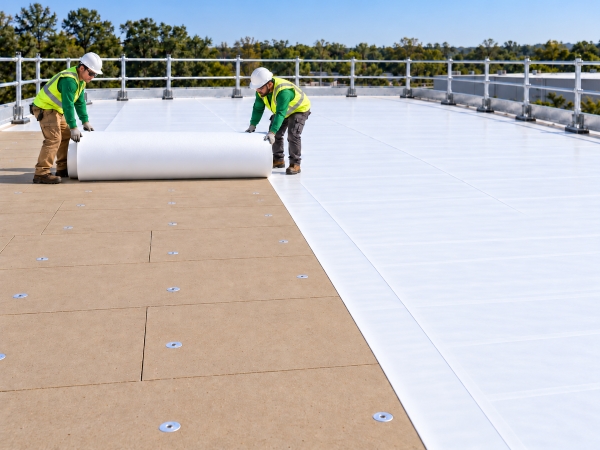
TPO roofing in Somerset, KY can be a strong commercial option when the existing roof, deck, drainage, insulation, and attachment requirements support the system. The membrane itself is only one part of the decision. A reliable TPO project also depends on substrate condition, seam welding, flashing, penetrations, drainage, and a clear installation scope.
Commercial Roofing Pros installs single-ply commercial roofing systems, including TPO, across Kentucky. For a Somerset building owner, the useful question is not simply whether TPO is popular, but whether the roof and the proposed installation method are a good match for the building.
What a TPO Roof Is
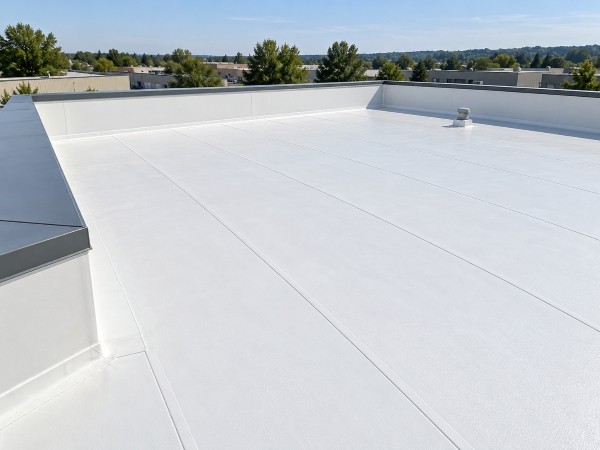
TPO, or thermoplastic polyolefin, is a single-ply membrane used on flat and low-slope commercial roofs. Sheets of membrane are installed across the roof and joined with hot-air welded seams. Those welded seams, along with flashing, penetrations, edges, drains, and other transitions, are critical parts of the finished waterproofing system.
Commercial Roofing Pros’ single-ply roofing systems page confirms that the company works with TPO as part of its commercial single-ply offering. TPO is one option among several, so the existing roof and building conditions should drive the choice rather than the membrane name alone.
Start With the Existing Roof
Before a TPO scope is set, the contractor should evaluate what is already on the building. The existing membrane or roof covering, insulation, deck, flashing, drains, penetrations, rooftop equipment, and prior repairs can all affect whether the project is a tear-off, an overlay, or a more limited repair or restoration.
An overlay may be possible on some roofs, but it should not be treated as the default. Existing moisture, deteriorated materials, an unsuitable substrate, local requirements, roof-loading concerns, or compatibility issues can change the plan. The proposal should explain why the selected approach fits the actual roof.
How TPO Can Be Attached
TPO systems can use different attachment methods. The right choice depends on the deck, insulation package, wind design, building conditions, and the specific system being installed.
| Attachment Approach | How It Works | What to Confirm |
|---|---|---|
| Fully adhered | The membrane is bonded to an approved substrate using the specified adhesive system. | Substrate condition, moisture limits, surface preparation, adhesive requirements, and weather limits. |
| Mechanically fastened | Fasteners and plates secure the system through the roof assembly into an approved deck. | Deck type, fastener pullout requirements where applicable, fastening pattern, perimeter conditions, and wind design. |
| Ballasted or loose-laid system | The membrane is held in place by ballast or another approved system design. | Structural capacity, roof layout, drainage, edge conditions, and whether the proposed system is suitable for the building. |
The proposal should identify the actual attachment method being used. A document that names only “TPO roofing” leaves out an important part of the installation design.
Seams and Flashing Need System-Specific Work
TPO seams are commonly joined with hot-air welding, but the quality of a seam depends on surface preparation, welding conditions, equipment setup, and workmanship. The contractor should explain how seam quality is checked during installation rather than relying on a vague statement that the roof is “heat welded.”
Flashing around walls, curbs, pipes, drains, skylights, and rooftop equipment is equally important. These transitions should be detailed for the selected TPO system and the actual roof configuration.
Moisture Should Be Evaluated Before the Scope Is Final
Interior stains or visible roof defects can indicate water entry, but they do not show how far moisture has traveled through the roof assembly. Commercial Roofing Pros lists thermal scanning among the tools it uses during roof inspections, which can help identify patterns that may justify closer investigation.
A thermal scan should not be treated as proof of wet insulation by itself. Findings should be interpreted with surface conditions, weather, roof construction, and other evidence. If concealed moisture is suspected, the contractor should explain what can be confirmed and whether additional investigation is needed before deciding on an overlay or replacement scope.
Drainage Still Has to Work
TPO is a waterproofing membrane, but it does not automatically correct poor slope, low areas, blocked drains, or outlet problems. If water repeatedly remains on the roof, the drainage condition should be evaluated separately.
The project may involve drain work, tapered insulation, localized slope correction, or another drainage adjustment when appropriate, but those items should be identified in the scope rather than assumed to be solved by installing a new membrane.
Insulation and Cover Boards Affect the Roof Assembly
The layers below the TPO membrane affect attachment, thermal performance, compressive strength, and the surface available for installation. The proposal should identify the insulation and any cover board included in the roof assembly rather than treating the membrane as the whole system.
Existing insulation may sometimes remain in place when it is suitable for the planned scope, while damaged or wet material may need to be removed. The decision should follow the actual condition of the roof and the requirements of the selected system.
Rooftop Traffic and Equipment Change the Design
Commercial roofs often serve as access routes for HVAC technicians, electricians, and other trades. Repeated foot traffic can affect the membrane around service paths, equipment curbs, and access points.
Walkway protection may be useful where regular traffic is expected, but the need and placement should match the building rather than follow a universal layout. Equipment supports, new penetrations, and future service access should also be considered before the membrane is installed.
What About TPO’s Light-Colored Surface?
Many TPO membranes are light colored and can reduce solar heat absorbed at the roof surface compared with darker materials. That does not guarantee a specific reduction in building cooling costs. Insulation, HVAC efficiency, roof construction, building use, sun exposure, and membrane properties all affect the result.
Energy performance should therefore be discussed as one part of the building envelope, not as a fixed savings claim tied to the membrane alone.
Questions to Ask Before Approving a TPO Proposal
A clear proposal should answer the following questions:
- What is the condition of the existing roof, insulation, and deck?
- Is the project a tear-off, overlay, or another scope, and why?
- What TPO attachment method is proposed?
- How will seams, flashing, penetrations, and roof edges be detailed?
- How will moisture concerns be evaluated before installation?
- How will the roof drain, and are low areas or outlet problems part of the scope?
- What insulation and cover-board layers are included?
- How will regular rooftop traffic or service paths be handled?
- What written warranty terms apply to the specific installed system?
TPO Roofing in Somerset, KY
Commercial Roofing Pros has more than 18 years of roofing experience and serves commercial buildings across Kentucky. For a Somerset property, the strongest TPO decision starts with the condition of the existing roof and a proposal that clearly defines attachment, seams, flashing, drainage, insulation, and moisture-related limits.
After installation, maintenance should follow the roof’s condition, rooftop activity, drainage, repair history, and any written requirements that apply to the system. Commercial Roofing Pros’ roof maintenance program provides additional context for ongoing commercial roof care.
Building owners can contact Commercial Roofing Pros at (857) 663-7767 to discuss whether TPO fits the roof and what installation scope is appropriate for the building.
Frequently Asked Questions
Is TPO the right roof for every flat commercial building?
No. The existing roof, deck, drainage, insulation, building use, attachment needs, and project scope all affect whether TPO is a good fit.
Can TPO be installed over an existing roof?
Sometimes. An overlay depends on the existing roof condition, moisture, substrate, structural considerations, local requirements, and the selected TPO system.
Why are TPO seams important?
The seams join separate membrane sheets into the waterproofing system. Proper preparation, welding, and quality checks are important to the finished roof.
Does a TPO roof need routine maintenance?
Yes, but the schedule should reflect the actual roof condition, drainage, rooftop traffic, repair history, weather exposure, and any written maintenance requirements rather than one fixed interval.