

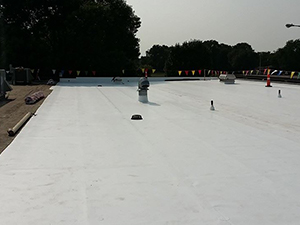
TPO roofing, or thermoplastic polyolefin roofing, is one single-ply option for low-slope commercial buildings in Campbellsville, KY. Whether it fits a specific building depends on the roof deck, drainage, insulation, attachment method, rooftop traffic, detailing, and future service access. Commercial Roofing Pros serves Campbellsville commercial properties and can be reached at 857-663-7767.
Is TPO Roofing a Good Fit for This Building?
A membrane should be selected for the building, not for a headline benefit. Use the same factors when comparing TPO with other single-ply options:
| Factor | What to Confirm | What It Means for TPO |
|---|---|---|
| Substrate condition | Deck stability, moisture, deterioration, and preparation needs | TPO needs a suitable, prepared substrate. Damaged or wet materials may need repair or removal first. |
| Drainage and slope | How water leaves the roof and where ponding occurs | Drainage problems should be corrected as part of the roof design rather than treated as a membrane benefit. |
| Attachment | Deck type, wind exposure, building height, and fastening options | The contractor should explain why a mechanically attached or adhered assembly fits the building. |
| Insulation | Existing condition, thickness goals, cover board, and moisture | Insulation decisions can affect energy performance, attachment, and the finished roof assembly. |
| Rooftop activity | Service traffic, equipment access, and recurring work areas | High-traffic areas may need walk pads or added protection to reduce puncture risk. |
| Detailing | Curbs, penetrations, walls, drains, edges, and equipment | More complex roofs require careful heat-welded detailing and experienced installation. |
| Service access | Whether seams and details can be reached for inspection and repair | Future maintenance should be considered before the system is selected. |
Understand TPO Seams and Repairs
TPO seams are joined with heat welding. Seam performance depends on surface preparation, equipment settings, overlap, workmanship, and field conditions during installation. The contractor should confirm the seam-welding process that will be used and how completed seams will be checked before the project is closed out.
Future repairs also need to be compatible with the existing membrane. A TPO repair may involve cleaning and preparing the area, then welding compatible TPO material where conditions allow. A generic patch intended for another membrane type should not be assumed to work. If the membrane has aged or weathered, the contractor should confirm that the repair area can be properly prepared and welded.
Drainage Matters More Than Membrane Color
TPO is commonly available with a reflective surface that can reduce solar heat gain at the roof surface. That can support a building’s cooling strategy, but actual energy results depend on insulation, HVAC efficiency, roof area, building use, air leakage, and operating conditions.
Drainage is a separate design issue. A reflective membrane does not correct blocked drains, damaged insulation, low areas, or other causes of ponding. Before selecting TPO, the contractor should document how the roof drains and identify any corrections that belong in the project scope.
Match Attachment and Insulation to the Building
TPO systems can be designed with different attachment approaches, and the appropriate choice depends on the deck, wind requirements, roof configuration, and other project conditions. The proposal should state the planned attachment method and explain why it fits the building rather than leaving that decision undefined.
Insulation should also be evaluated as part of the complete assembly. If existing insulation is wet or damaged, it may need to be removed. If the owner wants to improve thermal performance, the proposal should identify the insulation or cover-board changes being considered instead of treating the membrane itself as the only energy decision.
Plan for Rooftop Traffic and Service Access
Commercial roofs often support HVAC service, exhaust equipment, drains, and other systems that require regular access. Repeated foot traffic can damage any membrane if service paths are not planned. Ask whether walk pads or other protective measures are appropriate around equipment and frequently used routes.
Service access also affects maintenance. Seams, drains, flashings, edges, and penetrations should remain accessible enough to inspect and repair. A roof that is difficult to reach or crowded with equipment may require a more detailed maintenance plan regardless of which single-ply membrane is selected.
Compare TPO With Other Single-Ply Options
TPO is one of several single-ply membranes used on commercial roofs. PVC and EPDM have different material characteristics, seam methods, and suitability considerations. The decision should account for the building’s operating environment, exposure, rooftop activity, chemicals or exhaust where relevant, repair expectations, and long-term maintenance plan.
The separate installation process should come after system selection. If TPO is chosen, the project scope should then define preparation, insulation, attachment, flashing, seams, drainage details, and acceptance checks without turning this selection article into an installation walkthrough.
TPO Roofing in Campbellsville, KY
For a Campbellsville commercial building, TPO can be a strong option when the substrate is suitable, drainage is addressed, attachment and insulation are properly planned, rooftop traffic is managed, and future service access is considered. Commercial Roofing Pros can help compare TPO with other single-ply systems based on the building rather than a generic benefits list. Call 857-663-7767 to discuss the roof.
Frequently Asked Questions
Is TPO roofing right for every low-slope commercial building?
No. Suitability depends on substrate condition, drainage, insulation, attachment, rooftop activity, detailing, and the building’s operating environment.
How are TPO seams joined?
TPO seams are heat welded. Proper preparation, welding conditions, overlap, and workmanship all affect seam performance.
Can damaged TPO be repaired?
Often, yes. Repairs should use compatible TPO materials and a preparation and welding method appropriate for the existing membrane condition.
Does a reflective TPO roof guarantee lower cooling costs?
No. Reflectivity can reduce roof-surface heat gain, but actual energy results depend on insulation, HVAC efficiency, building use, and other building-specific conditions.