
For commercial property owners in Bowling Green, KY, choosing the right low-slope roofing material means looking beyond general claims about durability or low maintenance. A rubber roof membrane, also called EPDM, can be a practical option when the building use, roof deck, drainage, attachment method, seam details, and maintenance plan fit the system. Commercial Roofing Pros installs and maintains rubber roof membrane systems for commercial properties. Call (857) 663-7767 to discuss whether EPDM fits your building.
What Is a Rubber Roof Membrane?
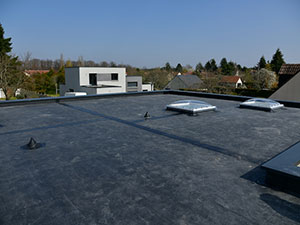
EPDM stands for ethylene propylene diene monomer, a synthetic rubber membrane used on flat and low-slope roofs. It is installed in sheets that may be fully adhered, mechanically attached, or used in another approved assembly depending on the deck, insulation, wind conditions, and project requirements.
EPDM is not a seamless roof. Field seams and many detail areas are joined with membrane-compatible tape, adhesive, primer, or other system-specific materials. Because those connections are part of the water-control system, seam condition and installation quality matter throughout the life of the roof.
Where EPDM Can Be a Good Fit
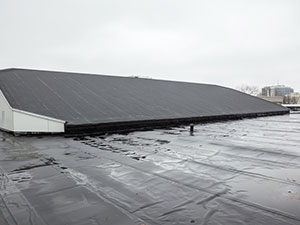
EPDM is known for flexibility and weathering resistance, which can make it useful on commercial buildings that experience seasonal temperature changes. Its suitability still depends on more than climate. Roof slope, deck condition, drainage, rooftop traffic, penetrations, chemical exposure, and future maintenance access all deserve review before the system is selected.
Facilities where grease, oils, chemicals, or unusual process exhaust may contact the roof should have those exposures considered during material selection. The right membrane or protective detail depends on the substance involved, the expected exposure, and the selected roofing system rather than a blanket rule that EPDM is right or wrong for every industrial or food-service building.
Energy Performance Depends on the Whole Roof Assembly
Standard EPDM is commonly black, so it should not be described as universally reflective. Some EPDM products and assemblies may use different colors or surface treatments, but building energy performance depends on the complete roof and building envelope.
Insulation level, membrane color, roof area, HVAC efficiency, occupancy, operating hours, shade, and local weather all affect heating and cooling demand. For that reason, an EPDM proposal should not promise a fixed energy-cost reduction based on the membrane alone.
Maintenance Is More Than an Occasional Patch
EPDM can be repairable when damage is localized, but low maintenance does not mean no maintenance. A useful maintenance program checks seams, flashing, penetrations, drains, scuppers, surface damage, previous repairs, and areas affected by rooftop service traffic. Inspection timing should reflect the roof’s age, condition, warranty or manufacturer guidance, weather exposure, and maintenance history.
Minor punctures or isolated seam problems may be repairable with materials designed for the existing EPDM membrane. Compatibility matters because generic sealants or patch products may not bond correctly or may interfere with later repair work. The roof should be cleaned and prepared according to the selected repair system before a patch or seam repair is installed.
Drainage and Moisture Can Change the Recommendation
Standing water is a sign that drainage deserves attention, but the cause may be blocked drains, inadequate slope, compressed insulation, structural deflection, or another condition. A membrane repair alone does not correct those underlying problems.
If moisture has moved below the membrane, the contractor may need to evaluate insulation, deck condition, and the extent of the affected area before deciding whether a localized repair is enough. Trapped moisture can also limit whether restoration or coating is appropriate. Any restoration approach should follow confirmation that the existing EPDM, substrate, moisture condition, preparation method, and selected product are compatible.
Installation Details Affect Long-Term Performance
How well an EPDM roof performs depends heavily on the installed assembly. Attachment, seam preparation, flashing, edge details, penetrations, and drainage transitions should follow the project specification and applicable manufacturer requirements. Building owners do not need to inspect adhesive coverage or fastening themselves, but they can ask which system was installed and what documentation should be kept with the building records.
Those records can include product information, repair history, inspection notes, photographs, and any applicable warranty or maintenance requirements. Good documentation makes future repairs easier to evaluate because the next contractor can see what materials and details were previously used.
Rubber Roof Membrane Services in Bowling Green, KY
Commercial Roofing Pros works with commercial and industrial properties in Bowling Green and provides single-ply roofing services that include EPDM. A useful assessment should determine whether the existing roof condition, drainage, membrane compatibility, and building use support installation, repair, or another roofing approach rather than assuming every flat roof needs the same solution.
To discuss a rubber roof membrane for your Bowling Green property, call Commercial Roofing Pros at (857) 663-7767.
Frequently Asked Questions
How long does an EPDM rubber roof membrane last?
There is no single lifespan that applies to every EPDM roof. Installation quality, membrane and seam condition, drainage, weather exposure, maintenance, and rooftop traffic all affect service life.
Does EPDM automatically lower cooling costs?
No. Standard black EPDM is not a reflective white membrane, and actual building energy use depends on insulation, HVAC performance, occupancy, roof color, and other conditions.
Can an EPDM roof be repaired instead of replaced?
Often, when damage is localized and compatible repair materials can be used. Broader moisture, repeated failures, deteriorated insulation, or deck problems may require a larger assessment.
Can an older EPDM roof be coated or restored?
Sometimes, but only after confirming membrane and product compatibility, surface preparation requirements, moisture condition, substrate stability, and any applicable warranty requirements.