
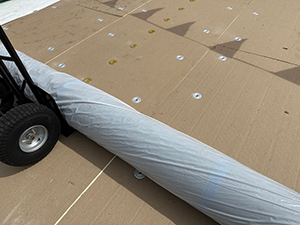
PVC roofing is a single-ply membrane that can be a strong fit for some commercial buildings in Bowling Green, KY, especially when the roof may be exposed to grease, oils, or specific chemicals. That does not make PVC the automatic choice for every building. The decision should follow the actual chemical exposure, roof deck and insulation condition, drainage, rooftop activity, seam detailing, and maintenance expectations. Commercial Roofing Pros installs and maintains PVC systems and can be reached at (857) 663-7767.
When PVC Roofing Can Be a Good Fit
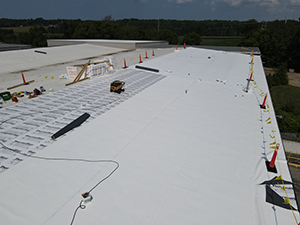
PVC can be worth evaluating when a building has rooftop conditions that make chemical compatibility important. Restaurants, food-service facilities, manufacturing operations, and buildings with rooftop exhaust may expose roofing materials to grease, oils, cleaners, or process-related chemicals.
The key question is not whether PVC is “chemical resistant” in general. Ask what substances actually reach the roof, how often exposure occurs, and whether the proposed membrane formulation and thickness are compatible with those conditions. Product-specific documentation matters because no single membrane should be assumed to resist every chemical or concentration.
Welded Seams Need Good Installation and Ongoing Inspection
PVC seams are typically joined with hot-air welding. A properly formed weld can create a durable seam, but welded construction does not guarantee that leaks can never develop.
Seam performance depends on surface preparation, welding temperature, equipment settings, overlap, technician technique, roof movement, later rooftop work, and aging. Ask how seam welds are checked during installation and how seams, flashings, penetrations, and repairs will be inspected during future maintenance.
Reflectivity Does Not Equal Guaranteed Energy Savings
Many PVC membranes are light-colored and reflective, which can reduce solar heat gain compared with a darker roof surface. Whether that translates into meaningful utility savings depends on insulation, HVAC efficiency, building use, roof area, operating schedule, and local weather.
Reflectivity should therefore be treated as one roof-performance factor rather than a guaranteed cooling-cost reduction. If energy performance is a project goal, evaluate the entire roof assembly and building instead of relying on membrane color alone.
Recyclability Is Product and Market Specific
Some PVC roofing products contain recycled material or may be eligible for recycling at end of service, but that is not universal. Availability depends on the membrane product, manufacturer program, contamination level, tear-off condition, and whether an appropriate recycling outlet serves the project area.
If sustainability matters to the project, ask what applies to the exact membrane being proposed and what end-of-life options are realistically available for the building.
Check the Deck, Insulation, and Drainage Before Choosing PVC
A new PVC membrane does not correct an unsound roof deck, wet insulation, inadequate drainage, structural deflection, or unresolved substrate damage. Those conditions should be identified before the membrane decision is finalized.
Ask what the contractor knows about the existing deck and insulation, what conditions remain uncertain, and how concealed moisture or deterioration will be investigated. The proposal should also explain whether drainage corrections, insulation work, or substrate repairs are included or excluded.
When PVC May Not Be the Best Match
PVC may be less compelling when the building has no meaningful chemical or grease exposure and another roof system better fits the deck, budget, maintenance plan, or other project requirements. The decision should be based on matched project needs rather than a blanket assumption that one single-ply membrane is universally superior.
This page should remain PVC-specific. The broader Bowling Green roofing content covers other system choices and should not be duplicated here.
Maintenance Questions to Ask Before Installation
PVC roofing still requires maintenance. Ask who will inspect seams, flashing, penetrations, drains, traffic areas, and locations disturbed by later mechanical work. There is no universal inspection interval that fits every roof; frequency should reflect roof condition, building use, rooftop activity, exposure, leak history, and any applicable warranty requirements.
For facilities with grease or chemical exposure, maintenance should also consider whether deposits or contaminants are accumulating on the membrane and whether those conditions could affect seams, flashings, or the membrane surface.
Can PVC Be Installed Over an Existing Roof?
A recover may be possible on some buildings, but it should not be assumed. The existing assembly, moisture condition, attachment, deck, insulation, drainage, code requirements, and roof-system specifications all affect whether another membrane can be installed over the current roof.
The contractor should explain what evidence supports a recover recommendation and what conditions would require tear-off or additional repair first.
PVC Roofing in Bowling Green, KY
Commercial Roofing Pros’ verified commercial scope includes PVC, TPO, and EPDM single-ply installation along with commercial repair and maintenance. For a Bowling Green building, the PVC decision should follow actual chemical exposure, substrate condition, seam detailing, drainage, maintenance needs, and project goals. Call (857) 663-7767 to discuss whether PVC is appropriate for the roof.
Frequently Asked Questions
Is PVC roofing resistant to every chemical?
No. Compatibility varies by membrane formulation, chemical type, concentration, temperature, and exposure pattern. Review the proposed product against the building’s actual exposures.
Do heat-welded PVC seams prevent leaks?
They can form durable seams when installed correctly, but no seam is maintenance-free or leak-proof forever. Installation quality, roof movement, later rooftop work, and aging all matter.
How often should a PVC roof be inspected?
There is no universal schedule. Inspection frequency should reflect roof condition, traffic, exposure, leak history, building use, and applicable warranty requirements.
Can PVC be installed over an existing commercial roof?
Sometimes, but only when the existing assembly and project requirements support a recover. Deck, insulation, moisture, attachment, drainage, and system requirements should be checked first.