
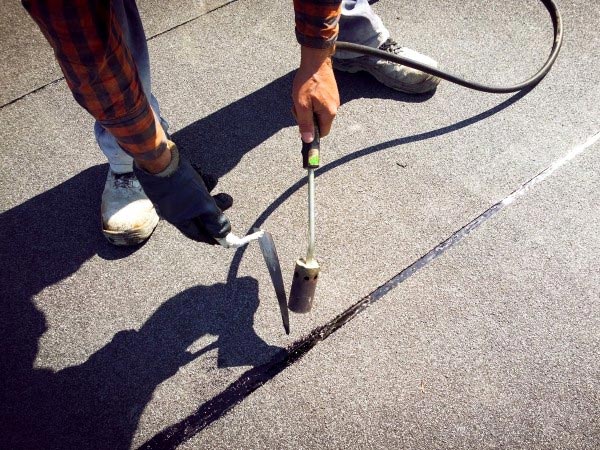
Commercial roof repair in Owensboro, KY starts with identifying the likely water-entry path, evaluating the surrounding roof condition, and choosing a repair method compatible with the existing system. Commercial Roofing Pros serves commercial properties across Kentucky, including Owensboro, and works with membrane, metal, and other commercial roof systems.
If your building has an active leak, the first priority is limiting interior damage. After that, a good repair starts with a diagnosis. This guide explains what commonly causes commercial roof leaks, how repair approaches differ by roof type, when a repair is enough and when it is not, and what to ask before work begins.
Common Causes of Commercial Roof Leaks
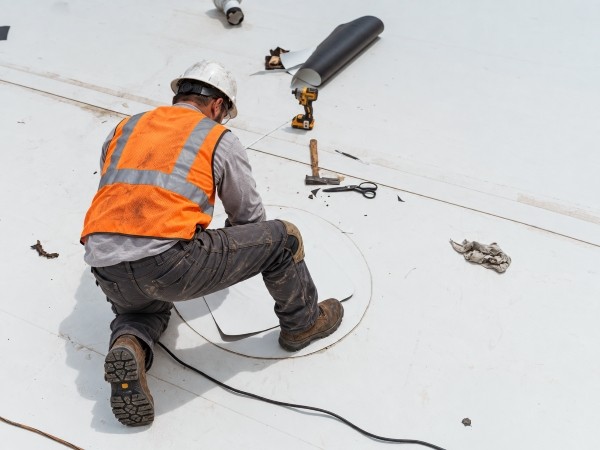
Commercial roof leaks can begin at seams, flashing, penetrations, fasteners, damaged membrane, drainage areas, or other transitions. An interior stain does not necessarily identify the exact entry point because water can travel within the roof assembly before it becomes visible inside.
- Open or failing seams: on membrane roofs, seams can open or become damaged; on metal roofs, panel laps, sealants, and related details can develop defects that need evaluation.
- Flashing failures: flashing at walls, curbs, parapets, and edges can separate, crack, or develop sealant or material defects.
- Penetrations: vents, pipes, conduit, skylights, and equipment supports require compatible flashing and sealing details that remain intact.
- Punctures and tears: service traffic, debris, equipment work, or weather-related impacts can damage membrane surfaces.
- Backed-out or missing fasteners: on metal roofs, loose, missing, or deteriorated fasteners and washers can create water-entry paths.
- Ponding water and clogged drains: standing water or blocked drainage should be evaluated because recurring ponding can interact with seams, flashing, coatings, and other existing defects.
- Storm damage: wind, hail, or debris can affect roof edges, flashing, fasteners, membrane, coatings, or other components, depending on the roof system and event.
How Repair Methods Differ by Roof Type
A repair should use materials and methods compatible with the installed roof system. A general-purpose patch or sealant should not be assumed suitable where the system requires a specific membrane, tape, adhesive, welded detail, flashing component, or other repair method. The table below summarizes how the approach changes.
| Roof type | Typical repair focus | What to confirm |
|---|---|---|
| TPO or PVC membrane | Open seams, punctures, flashing and penetration boots, repaired with compatible membrane material | Repair materials and preparation are compatible with the installed membrane and surrounding condition |
| EPDM rubber membrane | Seam failures, tears and flashing, repaired with materials made for EPDM | Compatible EPDM repair materials, preparation, and seam or flashing methods are specified |
| Metal panels | Fasteners, panel laps, sealant, corrosion and flashing details | Whether defects are localized or repeated across multiple seams, fasteners, panels, or flashing areas |
| Built-up and other flat systems | Blisters, splits, flashing and drainage areas | Whether moisture, substrate condition, or broader deterioration changes the repair scope |
Temporary Fix or Permanent Repair
A temporary response may be used to reduce active water entry or protect the building until permanent work can be completed, but the method depends on the roof system and site conditions. Temporary protection is not the same as a permanent repair. The permanent scope should address the confirmed defect and any affected surrounding materials. Ask any contractor to describe, in writing, which part of the work is temporary and what the permanent plan is.
When Repair Is Enough and When It Is Not
Localized repair may be appropriate when the defect is limited and the surrounding roof assembly remains suitable for repair. A broader scope should be considered when inspection or moisture findings show conditions beyond the immediate leak area.
- Confirmed moisture extends beyond the localized repair area.
- Leaks or related defects recur in different areas and indicate broader deterioration or repeated failure points.
- The membrane, coating, seams, flashing, or substrate show widespread deterioration that limits reliable spot repair.
- Drainage or slope conditions repeatedly contribute to standing water and are outside the scope of a localized patch.
In those cases, compare continued repair with restoration or replacement based on moisture, substrate condition, system compatibility, drainage, and the extent of deterioration. Our commercial roof restoration guide for Owensboro explains how that decision is made, and the metal roof restoration page covers panel roofs.
What to Do While You Wait for a Repair
Protecting the building matters before the roof is fixed. Move inventory and equipment away from affected interior areas when it is safe to do so, contain dripping water without creating another hazard, and document visible conditions from safe locations. Do not climb onto the roof to look for the leak yourself. Wet surfaces, edges and weakened areas are hazardous, and walking on a damaged roof can make the damage worse. Leave roof access to trained crews.
Questions to Ask Before Repair Work Starts
- How was the likely leak source identified, and what evidence supports the proposed repair area?
- What materials will be used, and are they compatible with the existing roof?
- What moisture or substrate conditions were found, and do they change the repair scope?
- What is temporary and what is permanent in the proposed work?
- How will rooftop equipment access and building operations be handled?
- What documentation will you receive when the work is done?
Repairs as Part of a Maintenance Plan
Routine inspections and maintenance can identify drainage restrictions, sealant or flashing defects, punctures, and other conditions before they develop into larger repair needs. The Commercial Roofing Pros maintenance program covers routine inspections and seasonal preparation for Kentucky businesses and documents the services performed. For membrane roofs, the membrane systems page describes common damage and care.
Commercial Roof Repair in Owensboro, KY
Commercial Roofing Pros serves commercial property owners across Kentucky, including Owensboro. See the Owensboro location page for an overview of the area. To discuss a repair, call 857-663-7767 and describe the roof type if known, where water has appeared inside, and any recent storm, equipment, or repair history.
Frequently Asked Questions
How do I know if my commercial roof needs repair?
Interior stains, dripping, visible membrane or flashing damage, open seams, drainage problems, or storm-related changes can justify a roof evaluation. The repair scope should follow the actual defect and surrounding condition that are found.
Will repairs disrupt my business?
Some repairs can be completed while the building remains occupied, but disruption depends on roof access, repair location, equipment, safety controls, interior leak areas, and the work method. Those coordination needs should be addressed before work starts.
Can a leak be repaired without replacing the roof?
Often, when the defect is localized and the surrounding roof assembly remains suitable for repair. Confirmed moisture, recurring failures, drainage problems, or broad deterioration may justify comparing restoration or replacement.
How long will a repair last?
Repair performance depends on the roof system, defect, surrounding condition, preparation, compatible materials, installation quality, drainage, and later roof use. A fixed duration should not be assumed without evaluating the specific roof.