

For a commercial building in Bowling Green, KY, choosing TPO roofing should start with the building and roof conditions rather than a general list of benefits. TPO is a single-ply membrane with heat-welded seams, but its suitability depends on the roof deck, drainage, insulation, attachment method, rooftop activity, detailing, and future service access.
Commercial Roofing Pros installs TPO as part of its single-ply roofing services across Kentucky. Call (857) 663-7767 to discuss the building and the conditions that should be reviewed before a membrane is selected.
Is TPO the Right Fit for Your Bowling Green Building?
TPO can be a practical option for many low-slope commercial roofs, but no membrane is automatically the best choice for every facility. Use the same building-specific factors when comparing TPO with PVC, EPDM, or another approved system.
| Factor | What the Contractor Should Confirm | Why It Matters for TPO |
|---|---|---|
| Substrate condition | Deck stability, moisture, deterioration, and preparation needs. | Damaged or wet materials may need repair or removal before the membrane is installed or recovered over an existing roof. |
| Drainage and slope | Whether drains, scuppers, slope, and low areas move water as intended. | A membrane choice does not correct a drainage defect. Ponding causes should be addressed in the project scope. |
| Attachment method | Deck type, wind design, building height, perimeter conditions, and the selected fastening or adhesion approach. | The attachment design needs to match the actual building rather than being chosen from a generic preference. |
| Insulation | Existing insulation condition, moisture concerns, and project-specific insulation goals. | Energy performance depends on the whole roof assembly, not the membrane color alone. |
| Rooftop activity | How often technicians access rooftop equipment and where regular traffic occurs. | Traffic planning and compatible walkway protection can reduce avoidable membrane damage. |
| Detailing complexity | Curbs, penetrations, walls, edges, drains, and other transitions. | Complex details increase the importance of system-compatible flashing and experienced heat-welded seam work. |
| Service access | Whether seams, drains, flashing, and equipment areas can be inspected and maintained safely. | Future access affects how practical routine inspection and repair will be after installation. |
TPO Seams and Repair Compatibility
TPO is a thermoplastic membrane, so seams are joined by heat welding rather than by the same seam methods used on every other single-ply system. Surface preparation, welding conditions, overlap, and workmanship all affect seam quality. The contractor should confirm the membrane type and condition before attempting repairs.
Damaged TPO can often be repaired when the surrounding membrane remains suitable, but the patch and repair process need to be compatible with the existing TPO. A generic patch intended for a different roof system should not be treated as interchangeable. If a problem is localized, Commercial Roofing Pros’ Bowling Green commercial roof repair information provides additional context on defining a repair scope.
Reflectivity, Energy Performance, and Cost
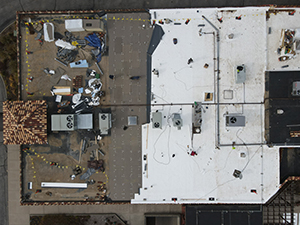
Light-colored TPO membranes can reduce solar heat absorbed at the roof surface. That can support cooling performance, but it does not guarantee a specific reduction in utility costs. Actual results depend on insulation, HVAC efficiency, building use, roof exposure, air leakage, and other parts of the building envelope.
Cost should also be compared by complete scope. Membrane thickness, insulation, attachment, tear-off or recover conditions, flashing, penetrations, access, and corrective work can all change the price. A lower membrane price does not automatically mean a lower total project cost if the building requires additional preparation or detailing.
What the Contractor Should Confirm Before TPO Is Selected
Before the project moves into installation planning, the contractor should document the existing roof and deck condition, moisture concerns, drainage, insulation assumptions, attachment approach, rooftop traffic, critical details, and service access. If a recover is being considered, the contractor should also confirm that the existing assembly and project conditions support that approach rather than assuming tear-off can be avoided.
This selection decision is separate from the installation process. Once TPO is chosen, the installation scope can define preparation, insulation, attachment, flashing, seams, drainage details, project sequencing, and acceptance checks. For contractor-selection questions, see Commercial Roofing Pros’ Bowling Green commercial roofing company guide.
Maintenance Expectations After Selection
TPO is not maintenance-free. Inspection timing should reflect roof condition, warranty requirements, storm exposure, rooftop work, and the building’s maintenance history rather than one fixed schedule for every property. Follow-up should focus on seams, flashing, penetrations, drainage, punctures, and traffic areas.
Debris should be removed when it interferes with drainage or inspection, and damage should be assessed promptly. If rooftop equipment is serviced frequently, the owner should also consider how access routes and protective walkways will be managed so maintenance activity does not create avoidable membrane damage.
TPO Roofing in Bowling Green, KY
Commercial Roofing Pros serves commercial properties in Bowling Green, Kentucky. TPO can be a strong option when the deck is suitable, drainage is addressed, insulation and attachment are planned correctly, rooftop activity is managed, and future service access is practical.
Call (857) 663-7767 to discuss whether TPO or another single-ply system fits the building’s actual conditions.
Frequently Asked Questions
Is TPO roofing right for every low-slope commercial building?
No. Suitability depends on substrate condition, drainage, insulation, attachment, rooftop activity, detailing, service access, and the building’s operating environment.
How are TPO seams joined?
TPO seams are heat welded. Preparation, welding conditions, overlap, and workmanship all affect the quality of the completed seam.
Can damaged TPO be repaired?
Often, yes, when the surrounding membrane remains suitable. Repairs should use compatible TPO materials and a preparation and welding method appropriate for the existing membrane condition.
Does reflective TPO guarantee lower cooling costs?
No. Reflectivity can reduce roof-surface heat gain, but actual energy results depend on insulation, HVAC efficiency, building use, roof exposure, and other building-specific conditions.